
6.maijs
Ligzdu vairākkārt ir apmeklējis svešs stārķis.
Mātīte ligzdu aizstāv.
Pirmā sadursme notika 3.maijā: Liznm video no viņas kanāla Youtube.
Vakara cīņā mātītei palīdzēt ieradās perējošais tēviņš:
Liznm video Youtube
https://www.youtube.com/watch?v=NHGTVt54mNY&t=425s
Melnie stārķi-2 Igaunijā, 2023-2026
-
jersikiete
- Posts: 235
- Joined: 15 Feb 2022 15:25
Re: Melnie stārķi-2 Igaunijā, 2023 (Janika)
Last edited by jersikiete on 06 May 2025 14:19, edited 2 times in total.
-
jersikiete
- Posts: 235
- Joined: 15 Feb 2022 15:25
Re: Melnie stārķi-2 Igaunijā, 2023 (Janika)
Šodien, 6.maijā, svešais stārķis joprojām apmeklē ligzdu, bet nav tik agresīvs kā sākumā.
Tiešraidē bija pauze 8 - 12.35
Bet LK forumā tiek apsvērta jauna doma, ka svešais stārķis varētu būt tēviņš, kā arī tiek izteiktas bažas par perējošā tēviņa ieilgušu prombūtni,
un LK forumā var skatīties Liznm video no šīs dienas notikumiem:
https://www.youtube.com/watch?v=a2MsuxLx-_U&t=8s
Tiešraidē bija pauze 8 - 12.35
Bet LK forumā tiek apsvērta jauna doma, ka svešais stārķis varētu būt tēviņš, kā arī tiek izteiktas bažas par perējošā tēviņa ieilgušu prombūtni,
un LK forumā var skatīties Liznm video no šīs dienas notikumiem:
https://www.youtube.com/watch?v=a2MsuxLx-_U&t=8s
Last edited by jersikiete on 13 May 2025 09:48, edited 1 time in total.
-
jersikiete
- Posts: 235
- Joined: 15 Feb 2022 15:25
Re: Melnie stārķi-2 Igaunijā, 2023 (Janika)
13.maijs
Ir pagājusi nedēļa, un ir jau pagājusi perējušā pāra sezona.
Ligzda atkal tukša.
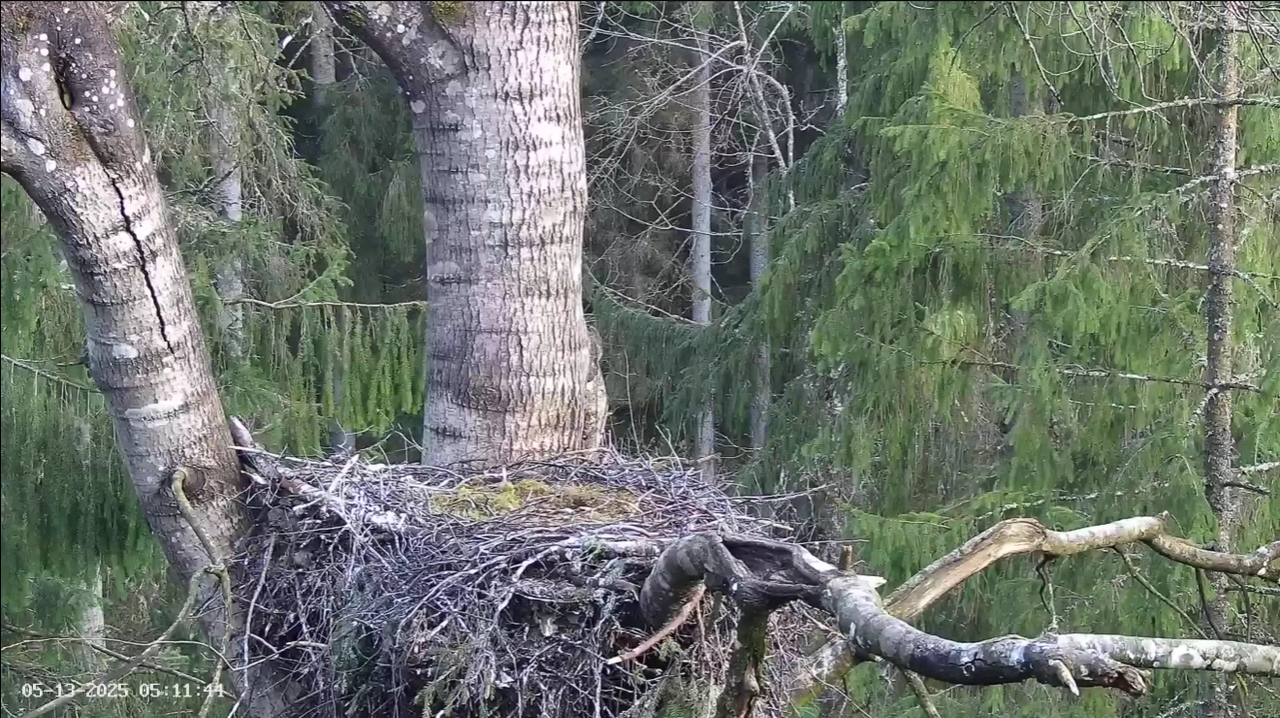
Iejaucās cits neatlaidīgs tēviņš.
Ir zaudēti 4 izšķīlušies stārķēni: divus sabradāja cīniņa laikā, divi gāja bojā nākamajā rītā nesildīti un nebaroti - mātīte viena to nespēja nodrošināt.
Olu šorīt izmeta neatlaidīgais tēviņš, kam labajā spārnā nav roba; tas ieradās ligzdā 6.37 un svilpoja.
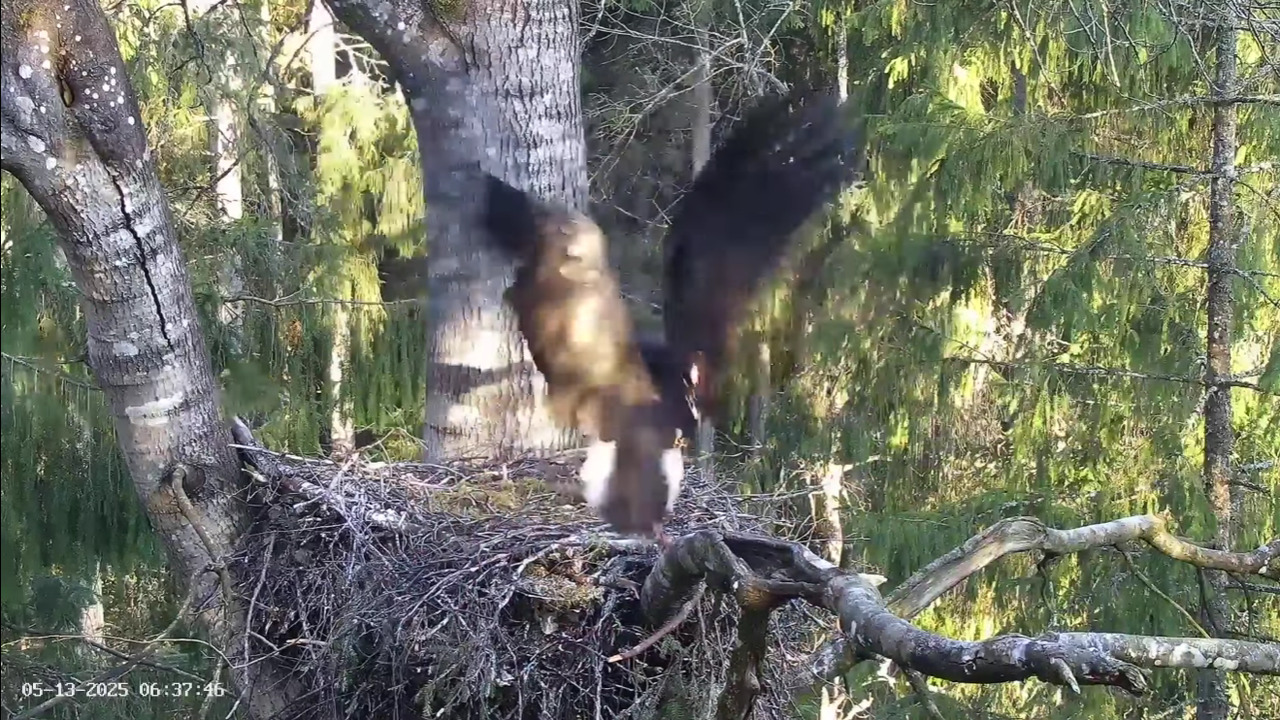
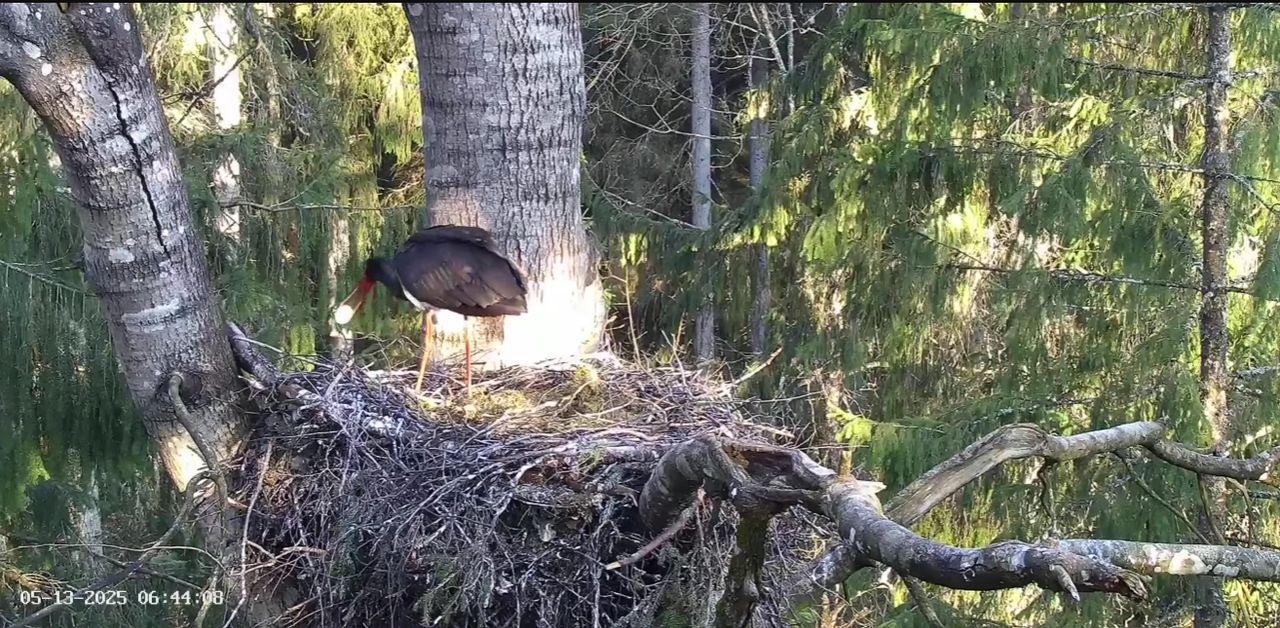
Ir pagājusi nedēļa, un ir jau pagājusi perējušā pāra sezona.
Ligzda atkal tukša.
Iejaucās cits neatlaidīgs tēviņš.
Ir zaudēti 4 izšķīlušies stārķēni: divus sabradāja cīniņa laikā, divi gāja bojā nākamajā rītā nesildīti un nebaroti - mātīte viena to nespēja nodrošināt.
Olu šorīt izmeta neatlaidīgais tēviņš, kam labajā spārnā nav roba; tas ieradās ligzdā 6.37 un svilpoja.
Last edited by jersikiete on 13 May 2025 09:48, edited 2 times in total.
-
jersikiete
- Posts: 235
- Joined: 15 Feb 2022 15:25
Re: Melnie stārķi-2 Igaunijā, 2023 (Janika)
7.13 ligzdas izcīnītājs tēviņš sāka svilpot un skatījās augšup, ar knābi aizskāra ligzdas zarus, tad apgūlās.
Iespējams, tas redzēja kādu mātīti un aicināja ligzdā.
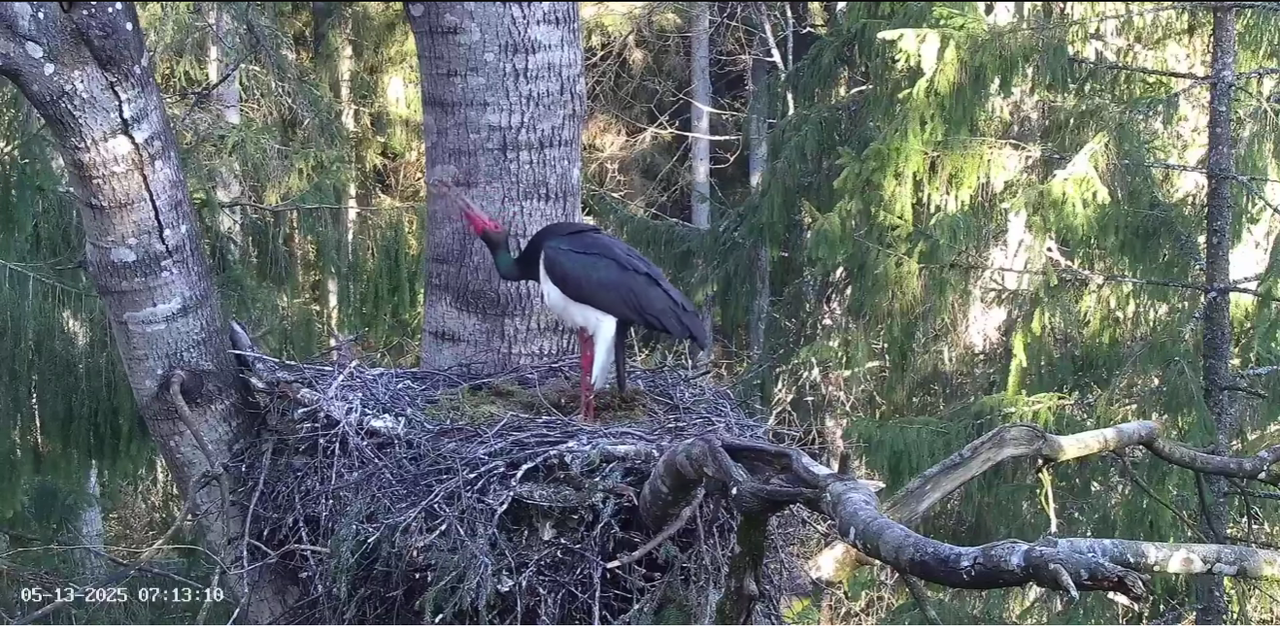
Tēviņš palika guļam līdz 8.00, kad tiešraide apstājās.
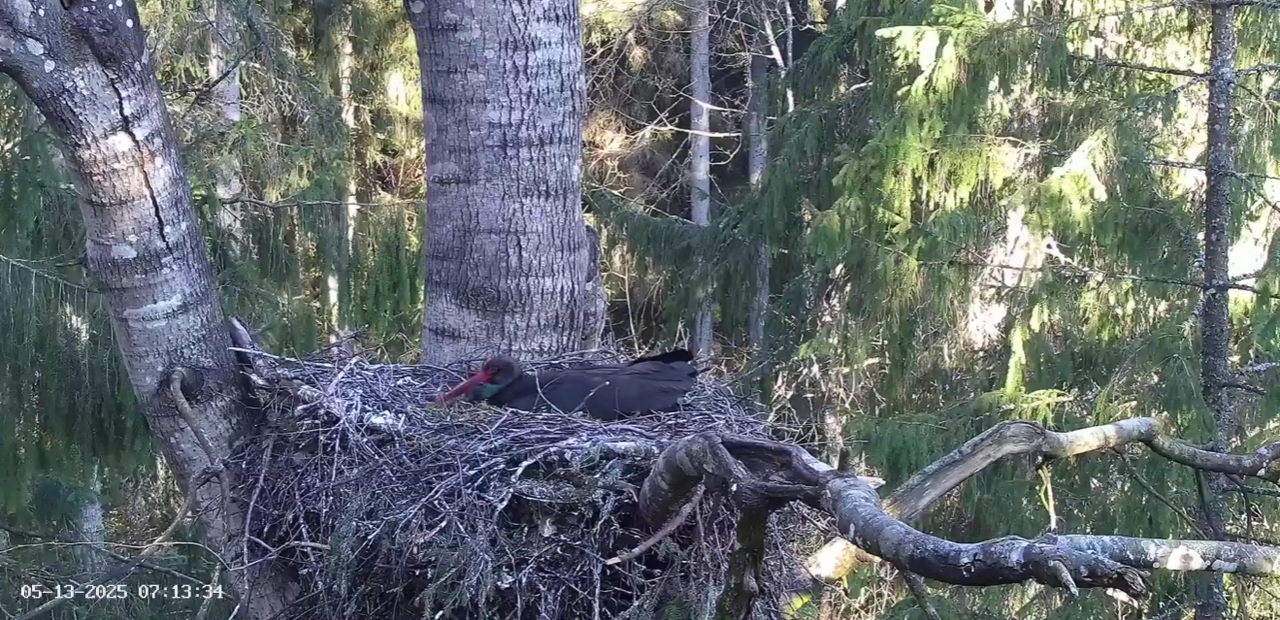
Vai ligzdā sāksies jauna sezona...
Iespējams, tas redzēja kādu mātīti un aicināja ligzdā.
Tēviņš palika guļam līdz 8.00, kad tiešraide apstājās.
Vai ligzdā sāksies jauna sezona...
-
jersikiete
- Posts: 235
- Joined: 15 Feb 2022 15:25
Re: Melnie stārķi-2 Igaunijā, 2023 (Janika)
Tiešraide drīz atsākās.
Tēviņš bieži ierodas ar zaru vai sūnas kumšķi.
Kamēr tas izlidojis, atlido krauklis un rūpīgi revidē ligzdu: sūnu pikas lido uz visām pusēm.
Varbūt bija ievērojis olu.
Nekā, draudziņ, esi nokavējis! Meklē paliekas zemē!
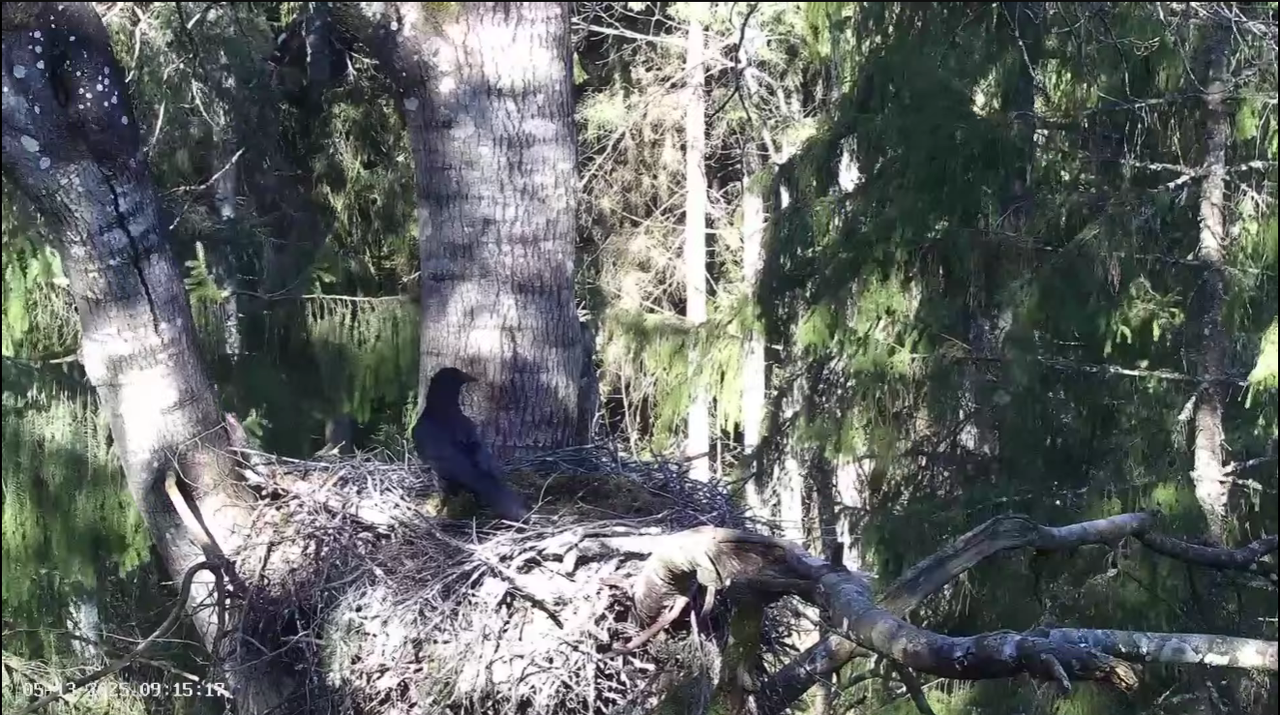
Tēviņš bieži ierodas ar zaru vai sūnas kumšķi.
Kamēr tas izlidojis, atlido krauklis un rūpīgi revidē ligzdu: sūnu pikas lido uz visām pusēm.
Varbūt bija ievērojis olu.
Nekā, draudziņ, esi nokavējis! Meklē paliekas zemē!
-
jersikiete
- Posts: 235
- Joined: 15 Feb 2022 15:25
Re: Melnie stārķi-2 Igaunijā, 2023 (Janika)
Notikumi attīstās strauji.
9.47 ligzdā droši ielaižas mātīte, apmetusi kā ierastu loku no kreisās uz labo pusi.
Vai tā ir perējusī vai cita?
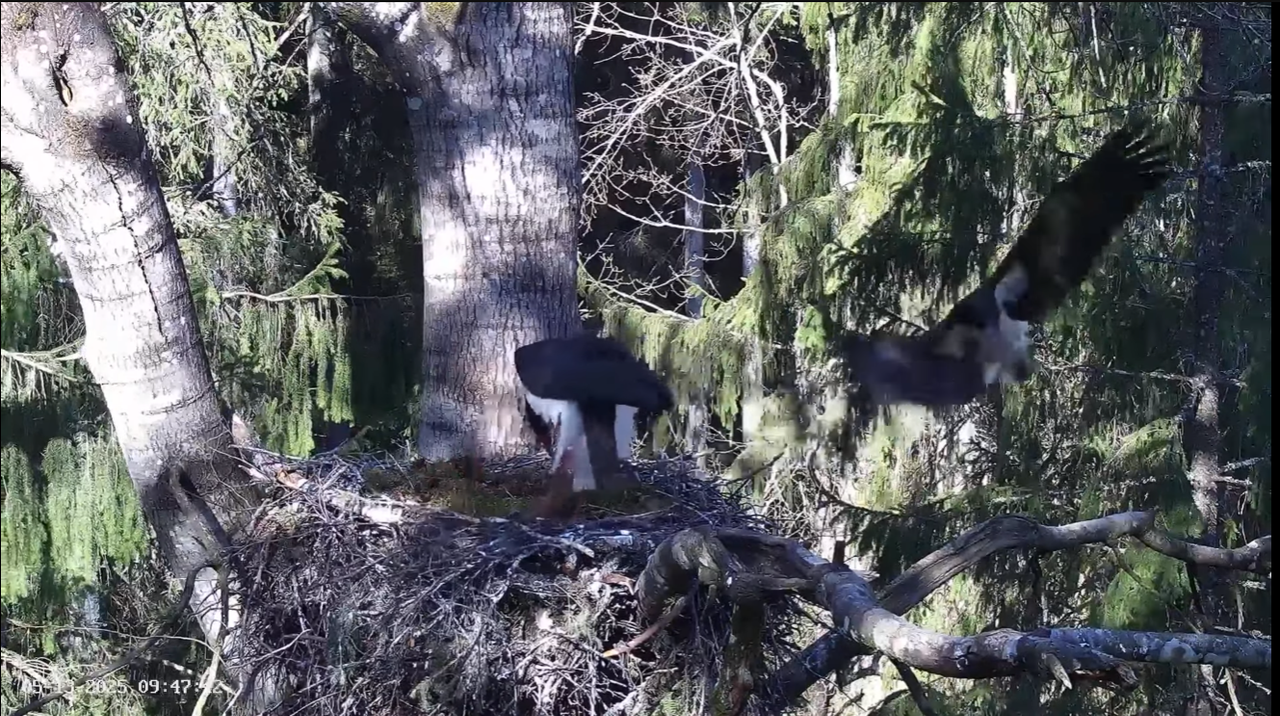
Izskatās saskaņa.
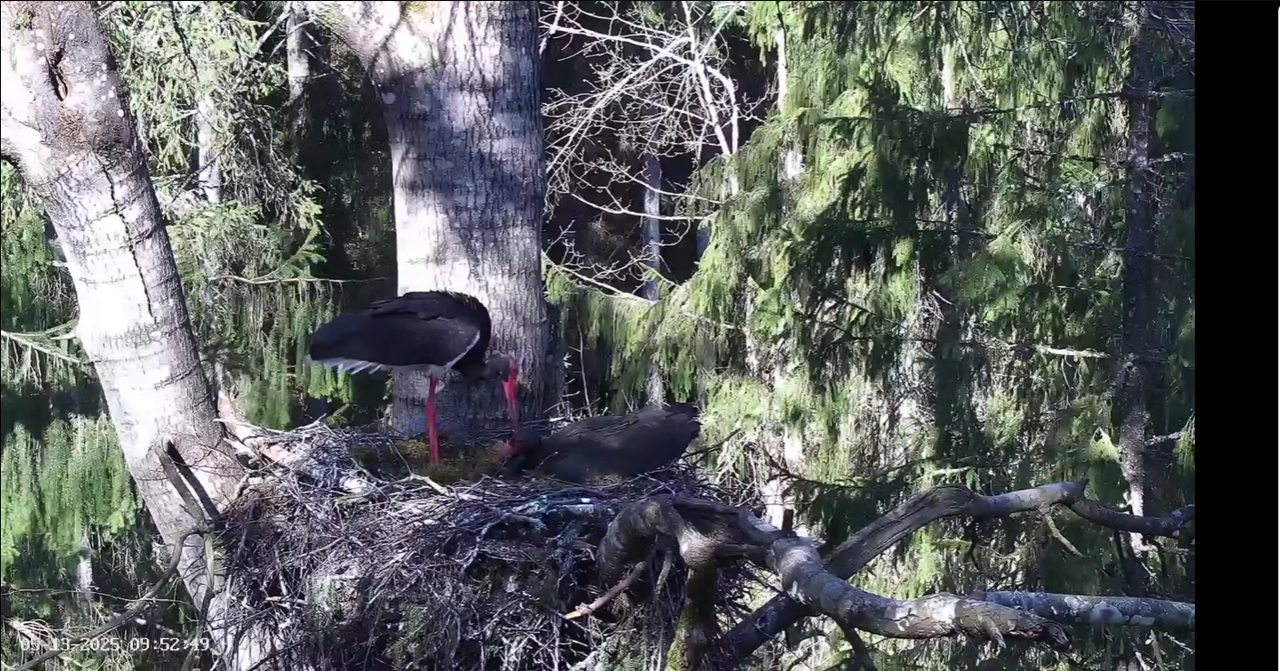
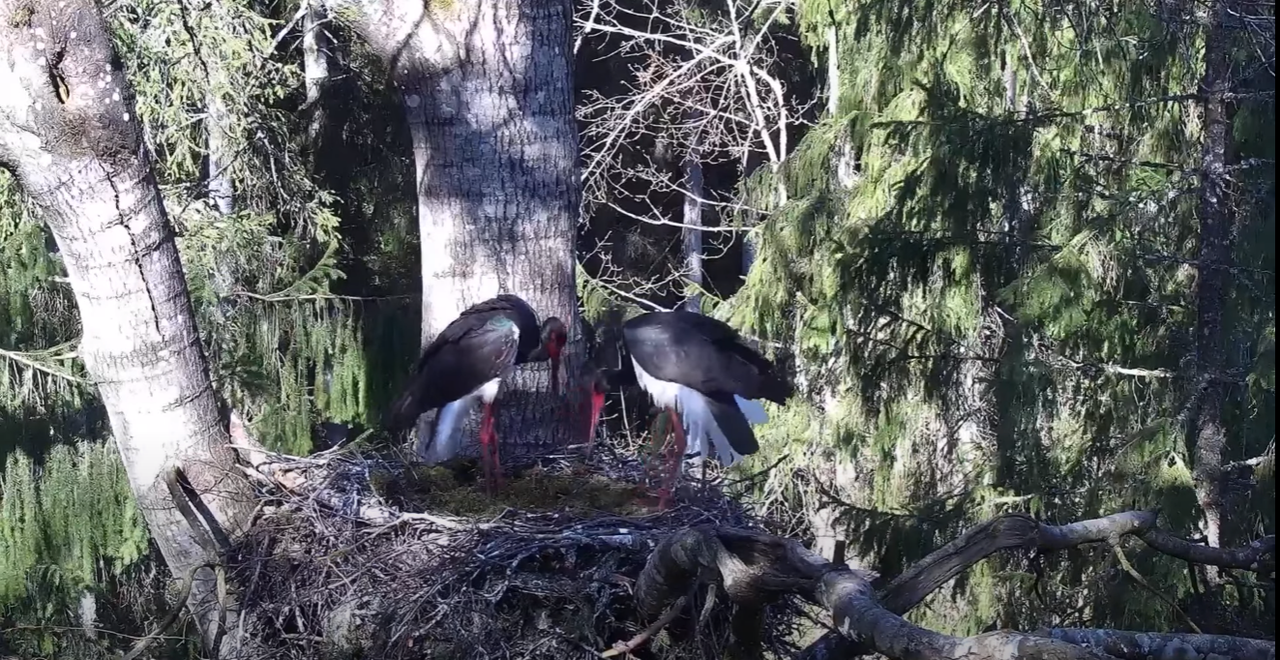
9.47 ligzdā droši ielaižas mātīte, apmetusi kā ierastu loku no kreisās uz labo pusi.
Vai tā ir perējusī vai cita?
Izskatās saskaņa.
Last edited by jersikiete on 13 May 2025 10:36, edited 1 time in total.
-
jersikiete
- Posts: 235
- Joined: 15 Feb 2022 15:25
Re: Melnie stārķi-2 Igaunijā, 2023 (Janika)
Te nu bij!
Nē, aplami - te nav nekādas saskaņas!
Mātīte bāž galvu zem tēviņa kakla un grūž laukā no ligzdas.
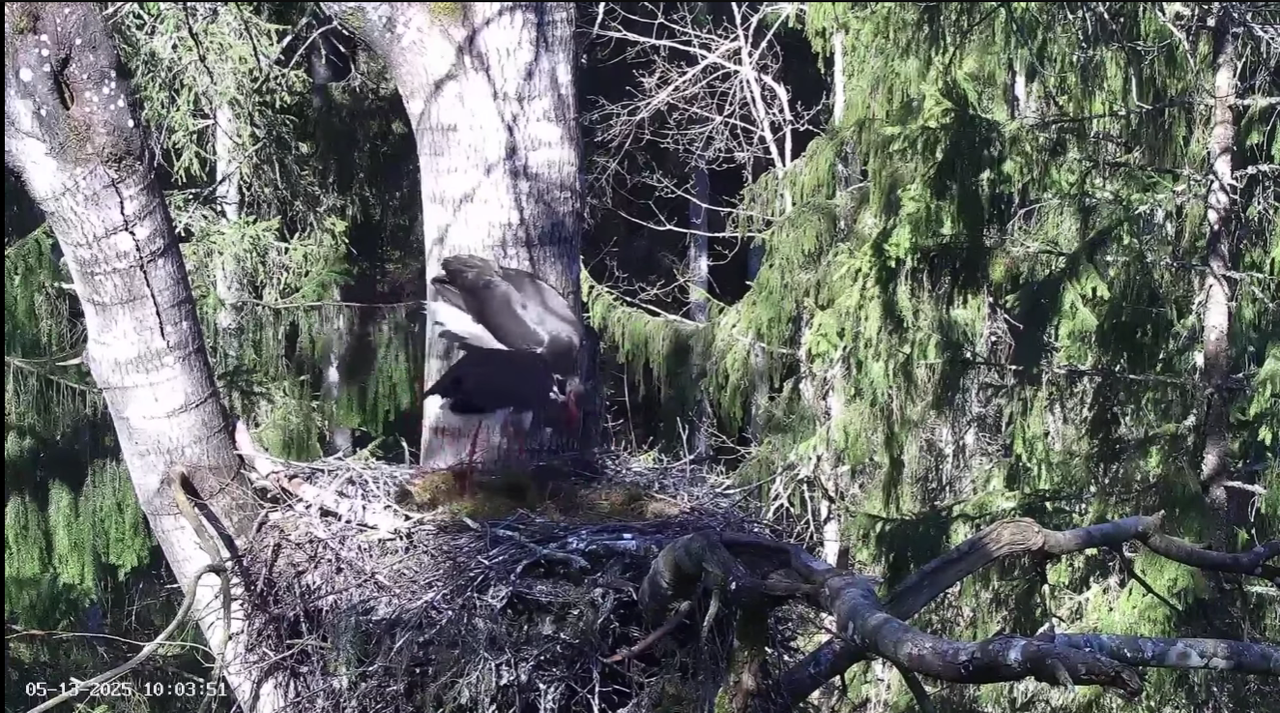
Izgrūž.
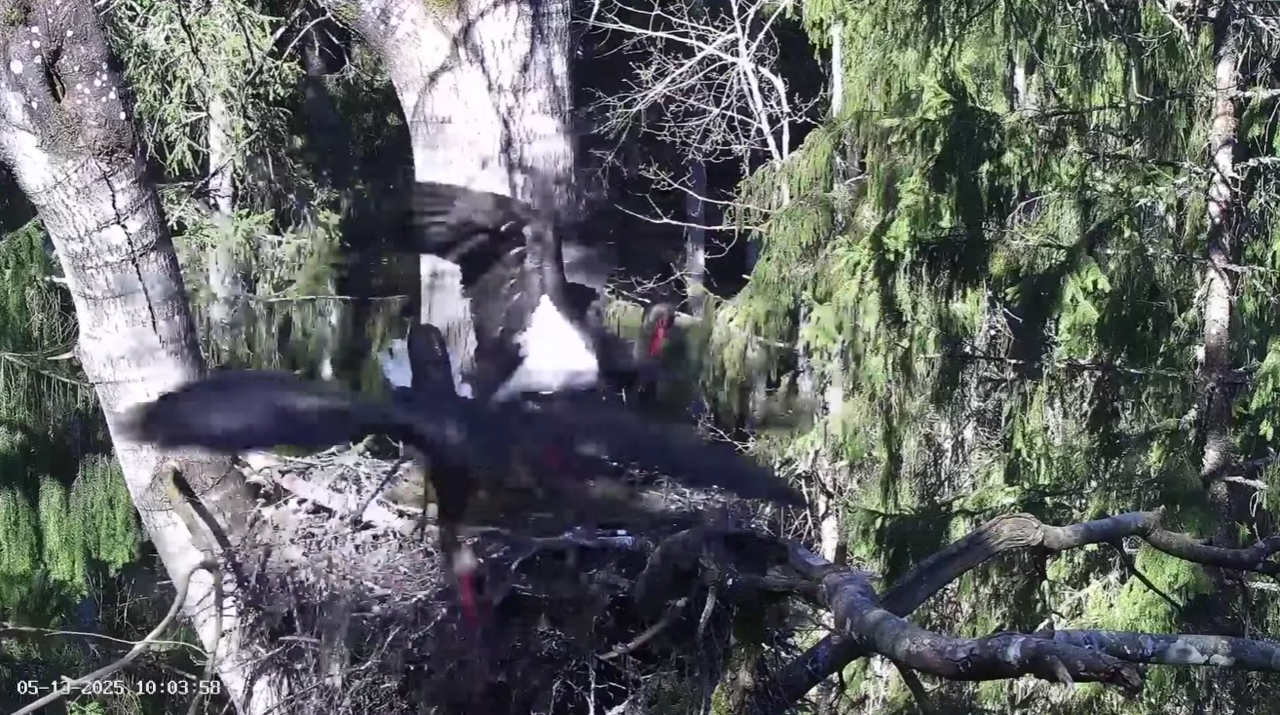
Tas notiek divreiz.
Tēviņš neatlaidīgi tuvojas. Mātīte uzbož muguras spalvas.
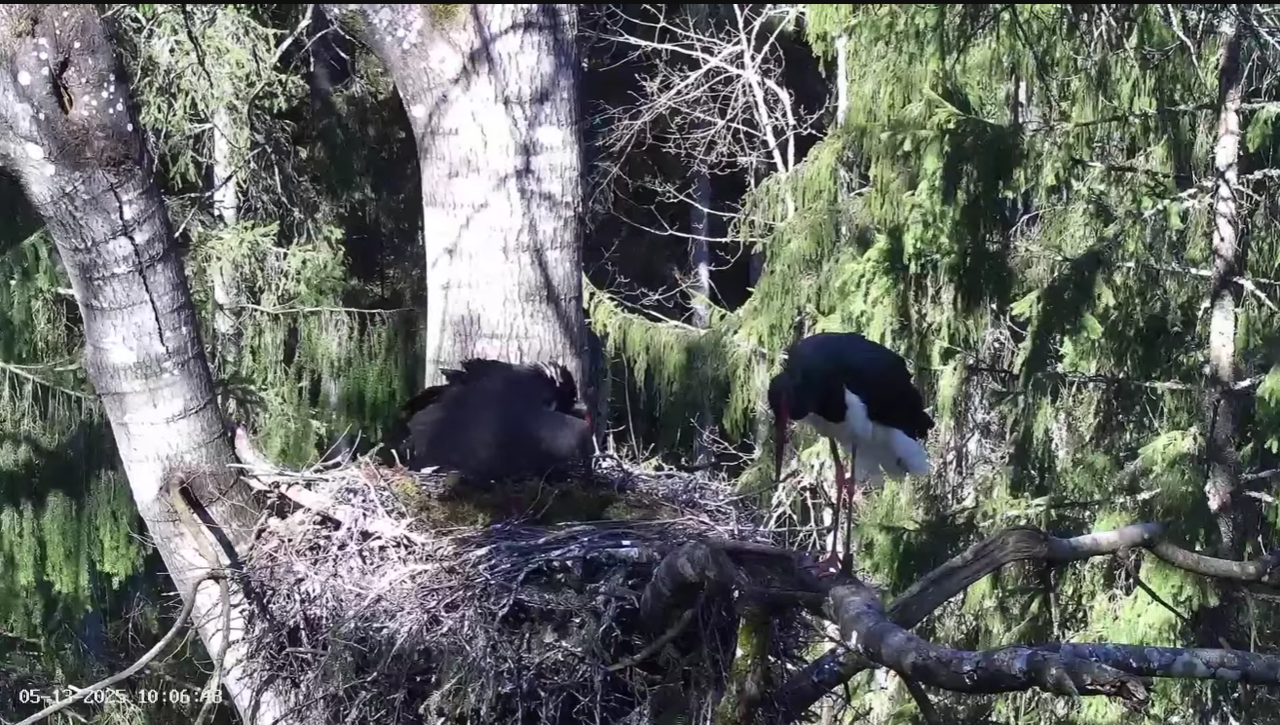
Tēviņš uzturas kaut uz blakus zara kā iepriekš, kad ligzdā bija perējoša mātīte.
Varbūt tā pati perējusī mātīte.
Nē, aplami - te nav nekādas saskaņas!
Mātīte bāž galvu zem tēviņa kakla un grūž laukā no ligzdas.
Izgrūž.
Tas notiek divreiz.
Tēviņš neatlaidīgi tuvojas. Mātīte uzbož muguras spalvas.
Tēviņš uzturas kaut uz blakus zara kā iepriekš, kad ligzdā bija perējoša mātīte.
Varbūt tā pati perējusī mātīte.
Last edited by jersikiete on 15 May 2025 11:09, edited 1 time in total.
-
jersikiete
- Posts: 235
- Joined: 15 Feb 2022 15:25
Re: Melnie stārķi-2 Igaunijā, 2023 (Janika)
Ligzdā 12.10 ierodas stārķis, un abi abi sadziedājas, bet atlido trešais stārķis.
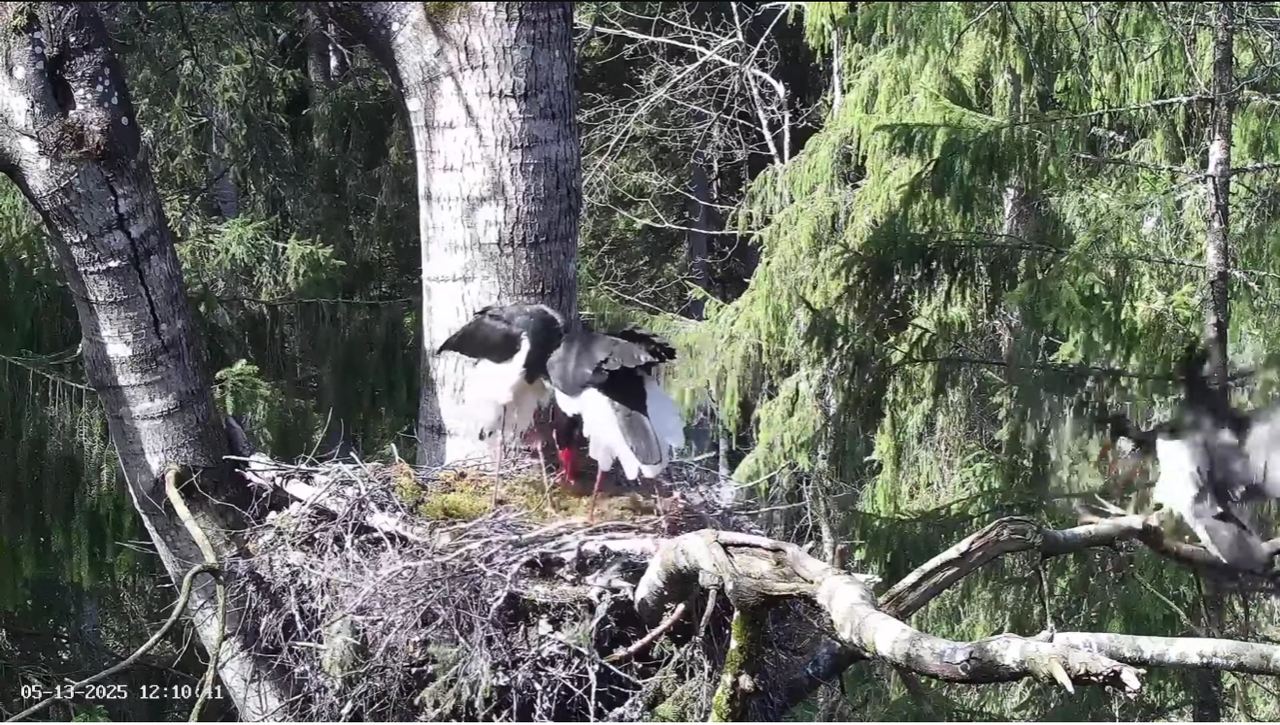
Tam ir gredzeni.
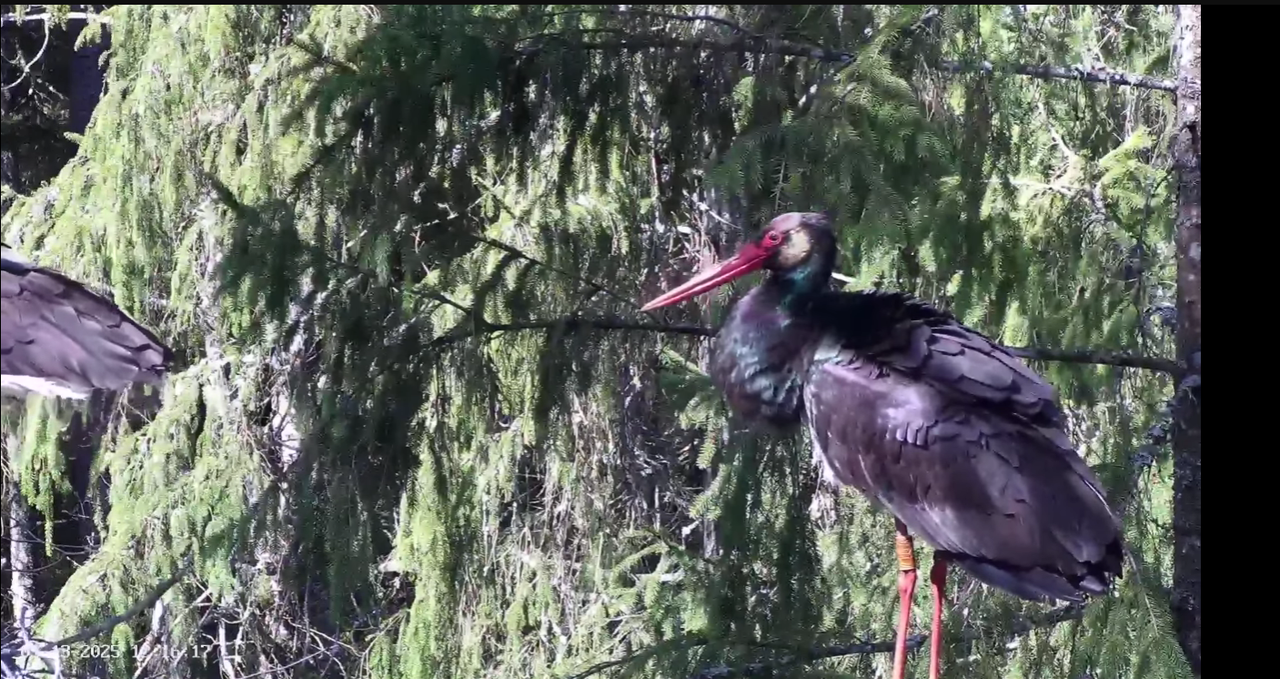
Kameras operators tos pietuvina. Diemžēl stārķis uz zara ir pagriezies uz citu pusi.
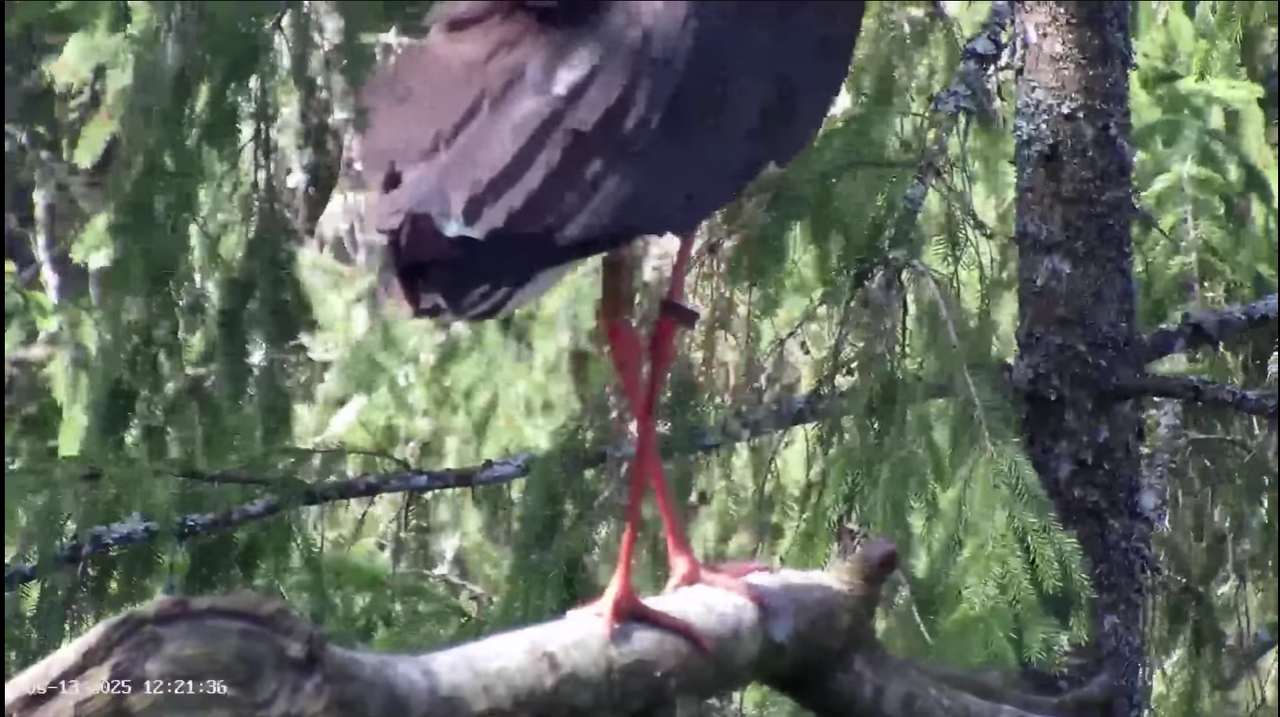
No tiešraides čata:
Ketlīna Luhta raksta: pēc (ornitologa) Urmasa (Sellis) domām, putns ir no 2022.gada ligzdas Harjumaa, Voose ciemata apkaimes. Viņš domā, ka tā ir mātīte.
Piezīme vēlāk:
Kādreiz mūsējo ligzdā Ogres novadā, igauņu Kergu ligzdā un tagad te jauna mātīte pirmajā gadā tikai novēro ligzdu vai tajā notiekošo.
Tam ir gredzeni.
Kameras operators tos pietuvina. Diemžēl stārķis uz zara ir pagriezies uz citu pusi.
No tiešraides čata:
1:09 PM
Kätlin Luht
Urmas told: Bird is from 2022 nest, from harjumaa, Voose village.. he thinks that it's a female bird.
Ketlīna Luhta raksta: pēc (ornitologa) Urmasa (Sellis) domām, putns ir no 2022.gada ligzdas Harjumaa, Voose ciemata apkaimes. Viņš domā, ka tā ir mātīte.
Piezīme vēlāk:
Kādreiz mūsējo ligzdā Ogres novadā, igauņu Kergu ligzdā un tagad te jauna mātīte pirmajā gadā tikai novēro ligzdu vai tajā notiekošo.
Last edited by jersikiete on 15 May 2025 11:51, edited 2 times in total.
-
jersikiete
- Posts: 235
- Joined: 15 Feb 2022 15:25
Re: Melnie stārķi-2 Igaunijā, 2023 (Janika)
Un atkal raibi notikumi.
13.42 (laiku grūti saskatīt) ierodas cāļu tēvs ar robu labajā spārnā.
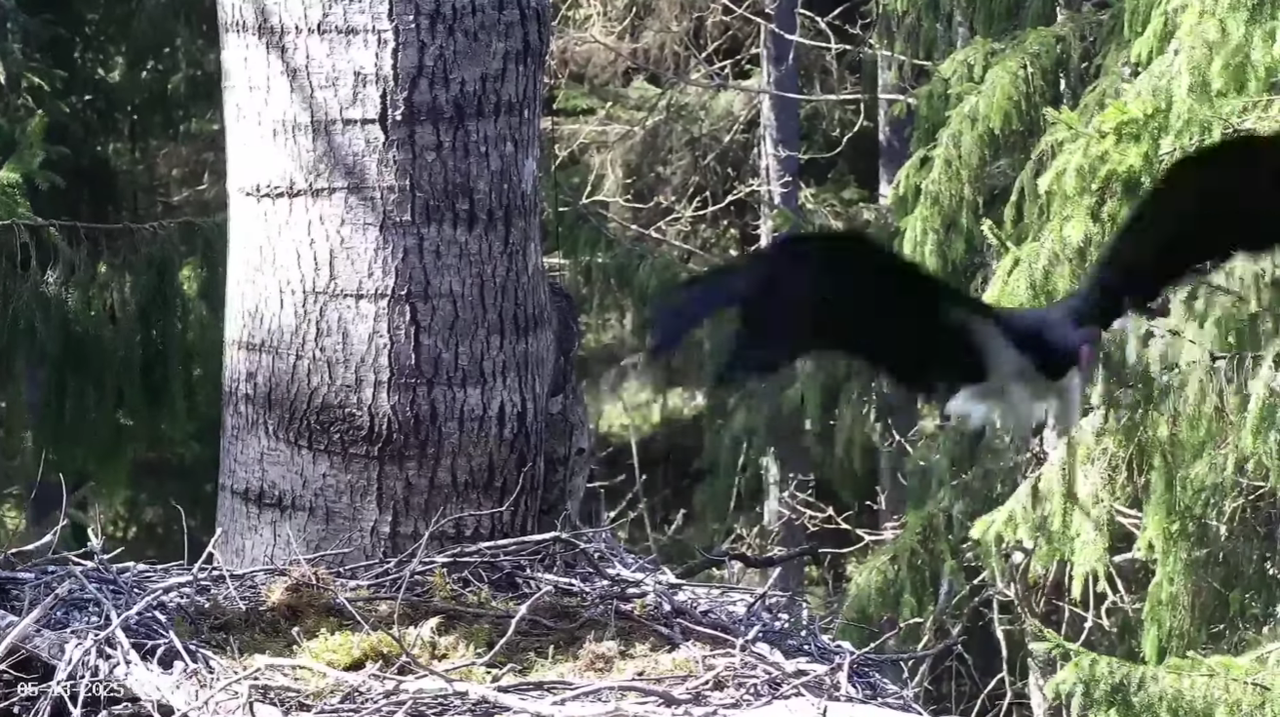
Kārto ligzdu pa savam, purina sūnas, drumslas izmet.
13.48 no augšas ligzdā iebrūk cits stārķis, un ar joni sākas cīniņš.
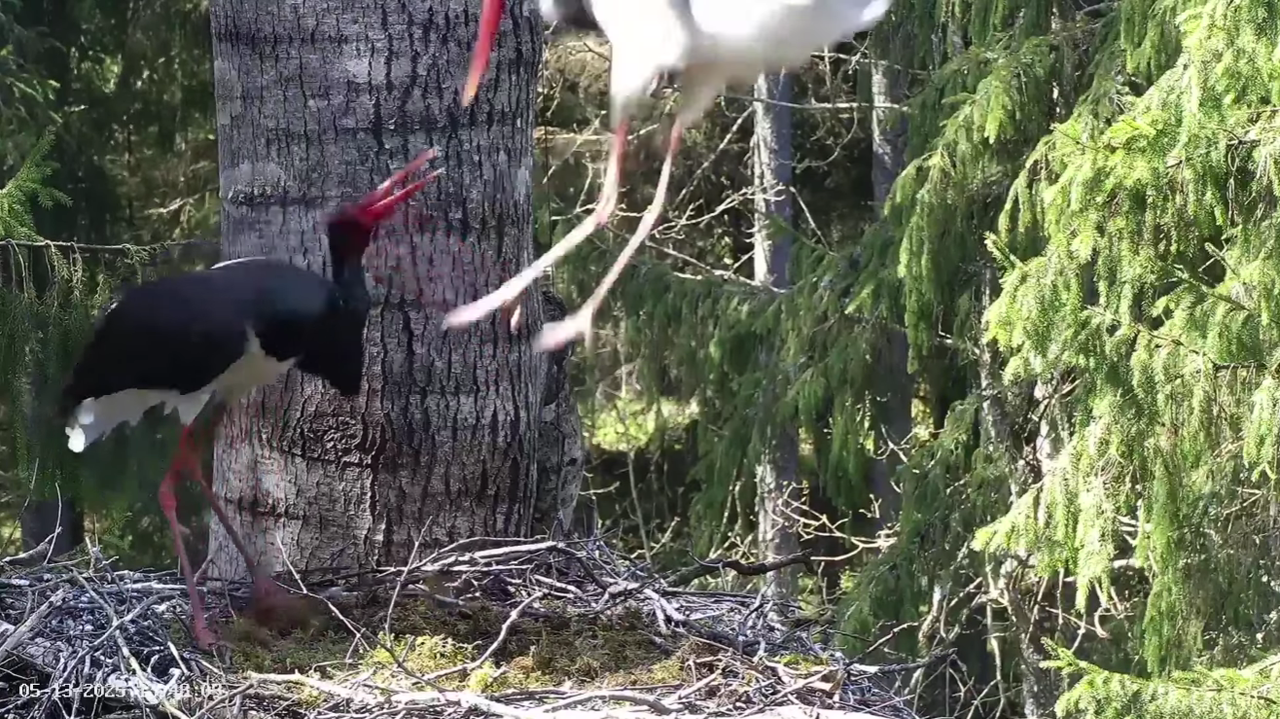
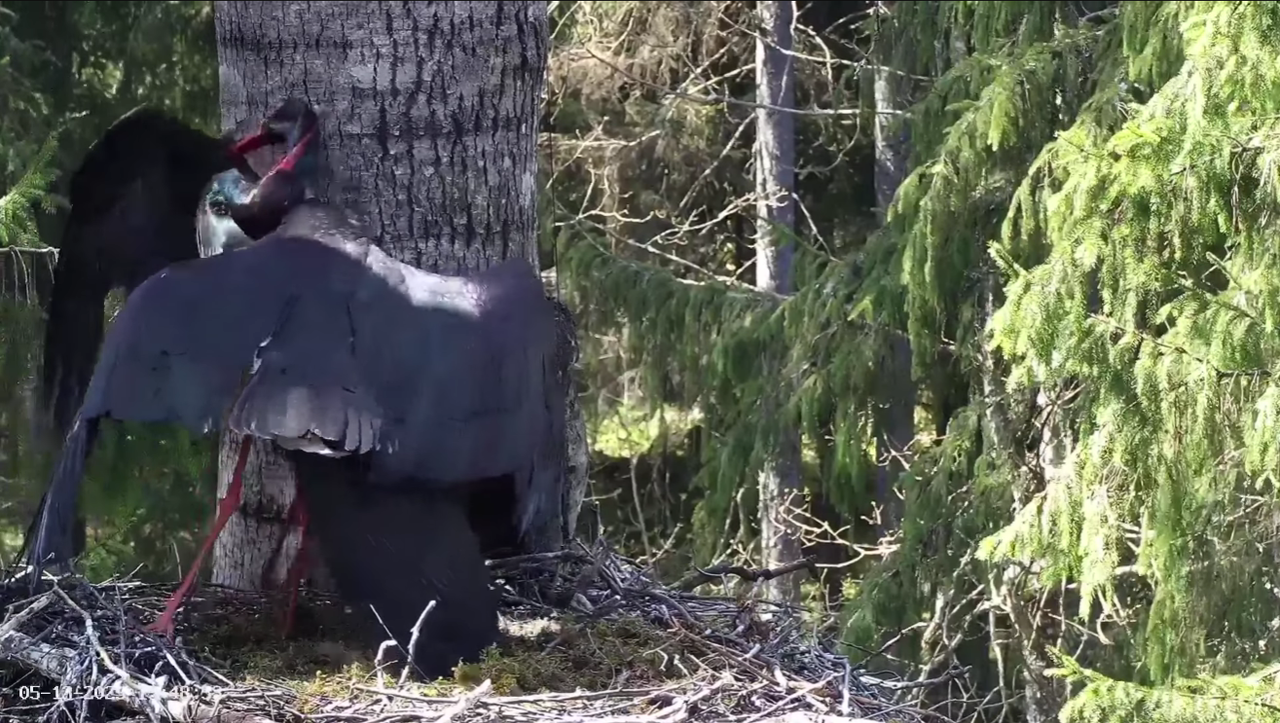
13.42 (laiku grūti saskatīt) ierodas cāļu tēvs ar robu labajā spārnā.
Kārto ligzdu pa savam, purina sūnas, drumslas izmet.
13.48 no augšas ligzdā iebrūk cits stārķis, un ar joni sākas cīniņš.
Last edited by jersikiete on 15 May 2025 11:47, edited 1 time in total.
-
jersikiete
- Posts: 235
- Joined: 15 Feb 2022 15:25
Re: Melnie stārķi-2 Igaunijā, 2023 (Janika)
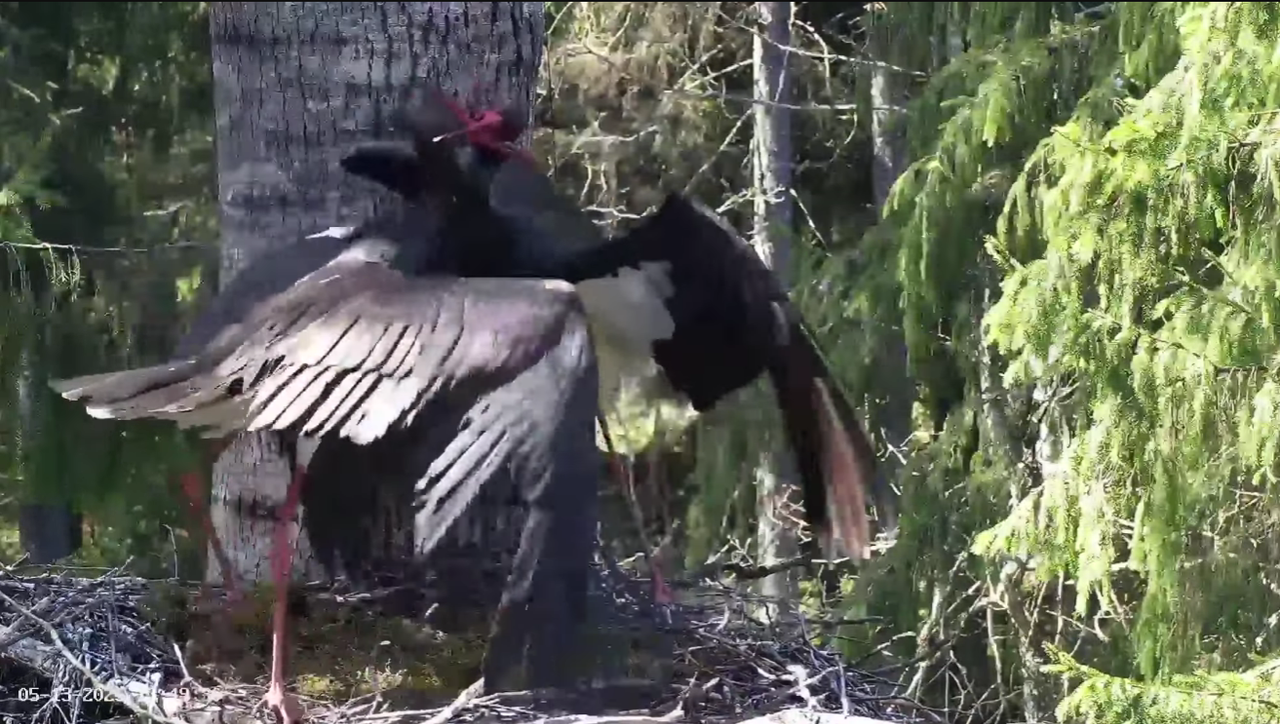
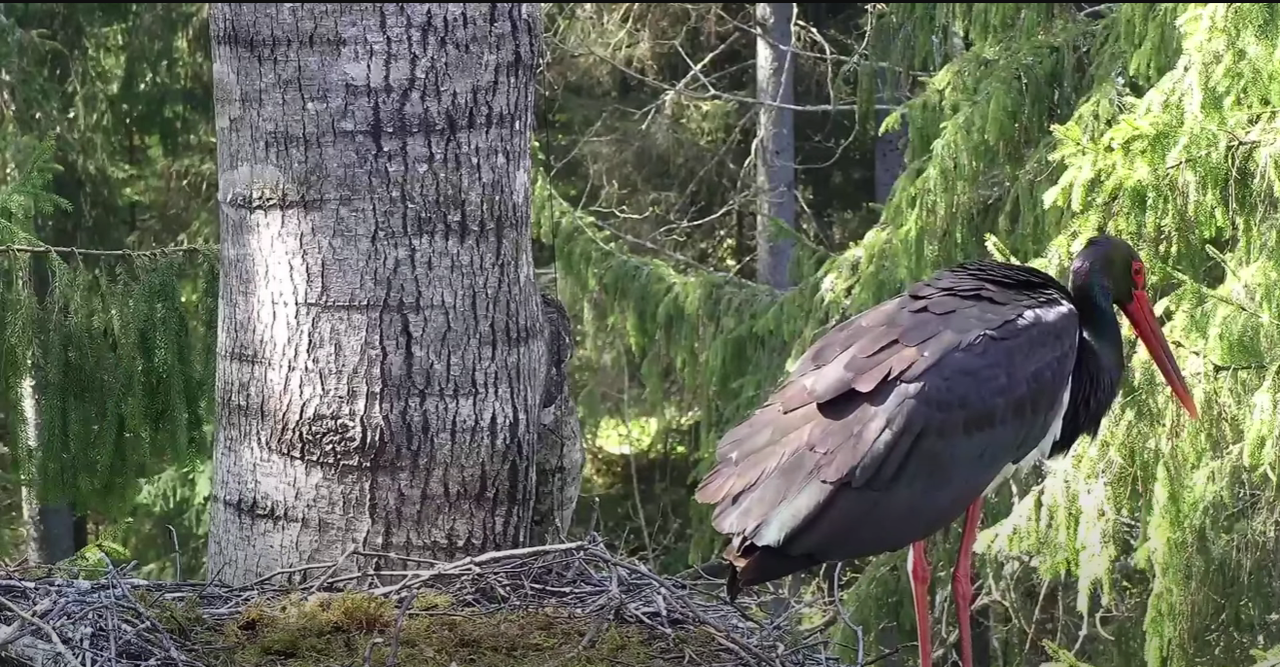
Cīniņa beigās cāļu tēvs no ligzdas ir izgrūsts.
Ligzdā paliek stārķis bez roba spārnā, kas gan tūlīt aizlaižas.
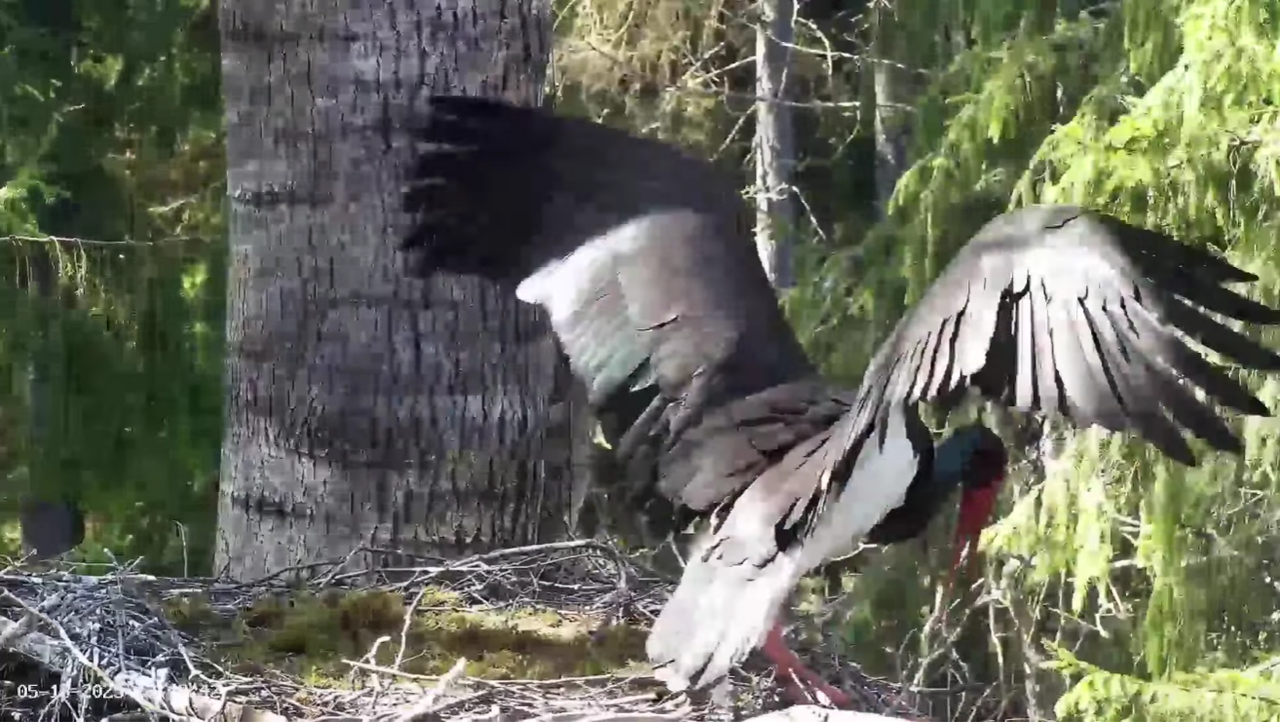
14.06 nākamā stārķa ierašanās - bez gavilēm, klusu.
-
jersikiete
- Posts: 235
- Joined: 15 Feb 2022 15:25
Re: Melnie stārķi-2 Igaunijā, 2023 (Janika)
15.maijs
Naktī ligzdā uzturējās stārķis.
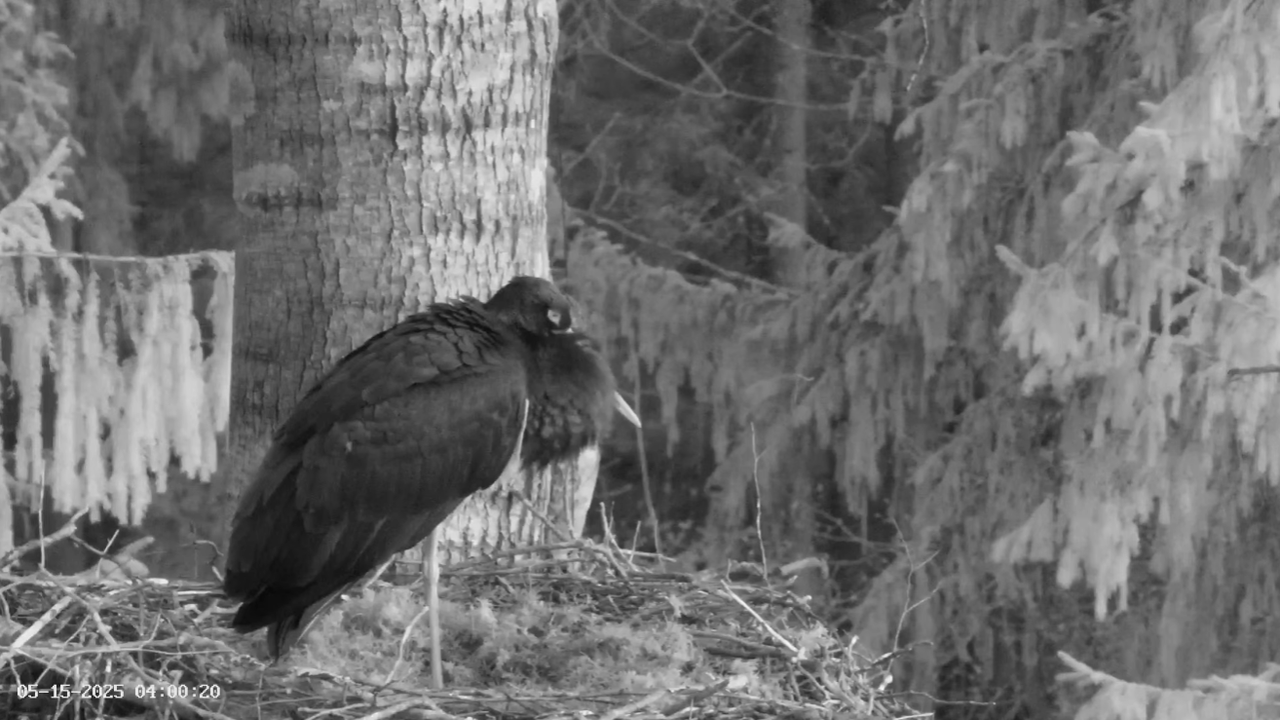
Kad no rīta tas izlido, tad var redzēt, ka labajā spārnā ir visas spalvas.
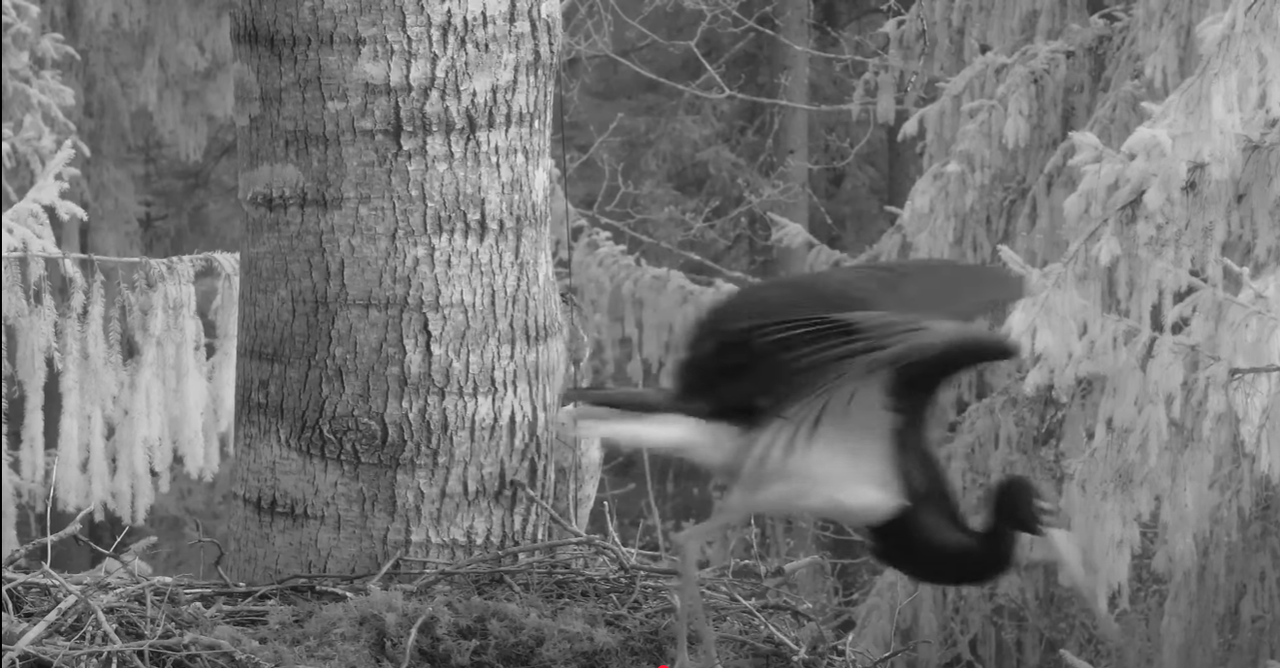
Tātad ligzdas neatlaidīgais iekarotājs.
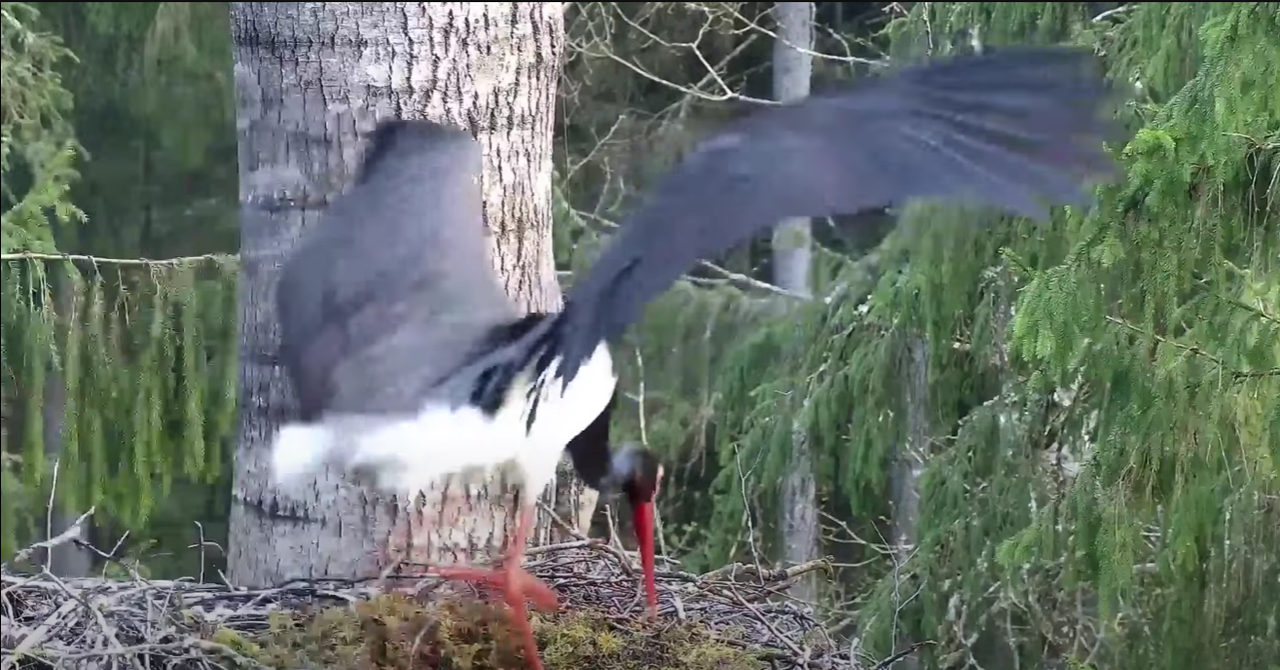
Šorīt nenes sūnas vai zarus. Atgriežas, pasvilpo, gaida.
Naktī ligzdā uzturējās stārķis.
Kad no rīta tas izlido, tad var redzēt, ka labajā spārnā ir visas spalvas.
Tātad ligzdas neatlaidīgais iekarotājs.
Šorīt nenes sūnas vai zarus. Atgriežas, pasvilpo, gaida.
-
jersikiete
- Posts: 235
- Joined: 15 Feb 2022 15:25
Re: Melnie stārķi-2 Igaunijā, 2023 (Janika)
Sagaidīja.
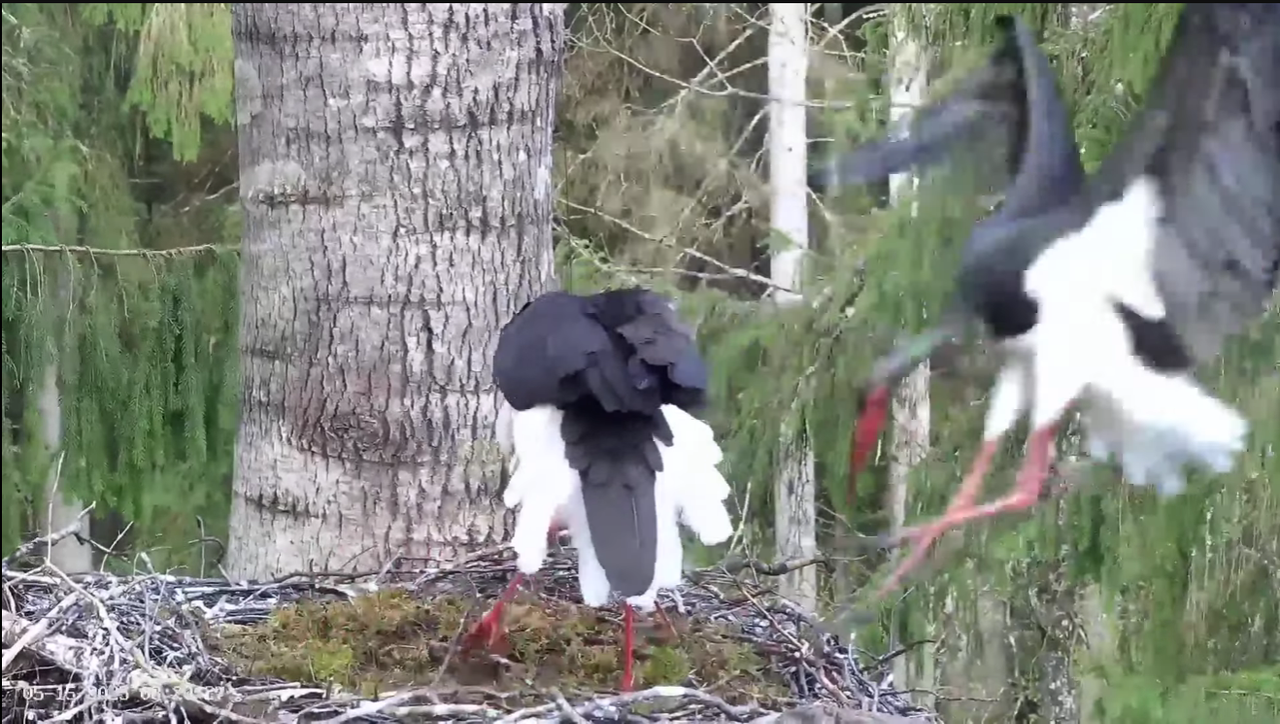
Atkal izskatās pēc saskaņas.
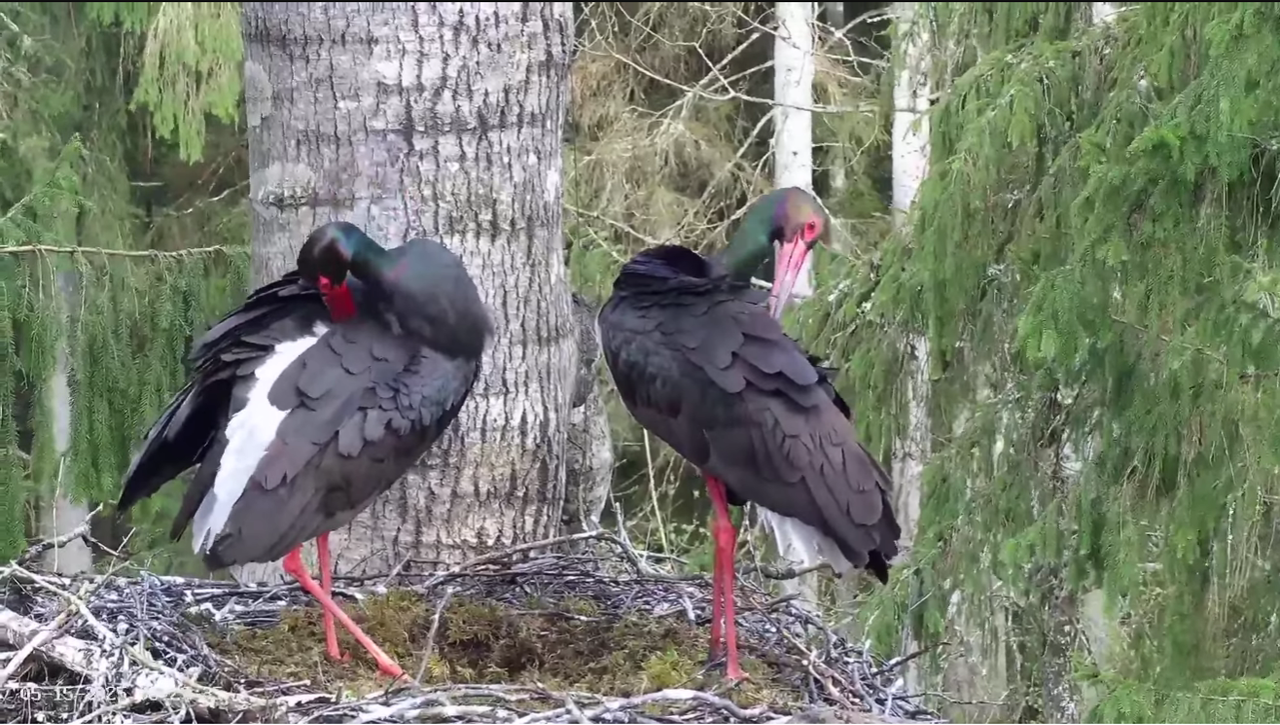
Pārošanās. Arī vakar bijusi novērota pārošanās, raksta čatotāji.
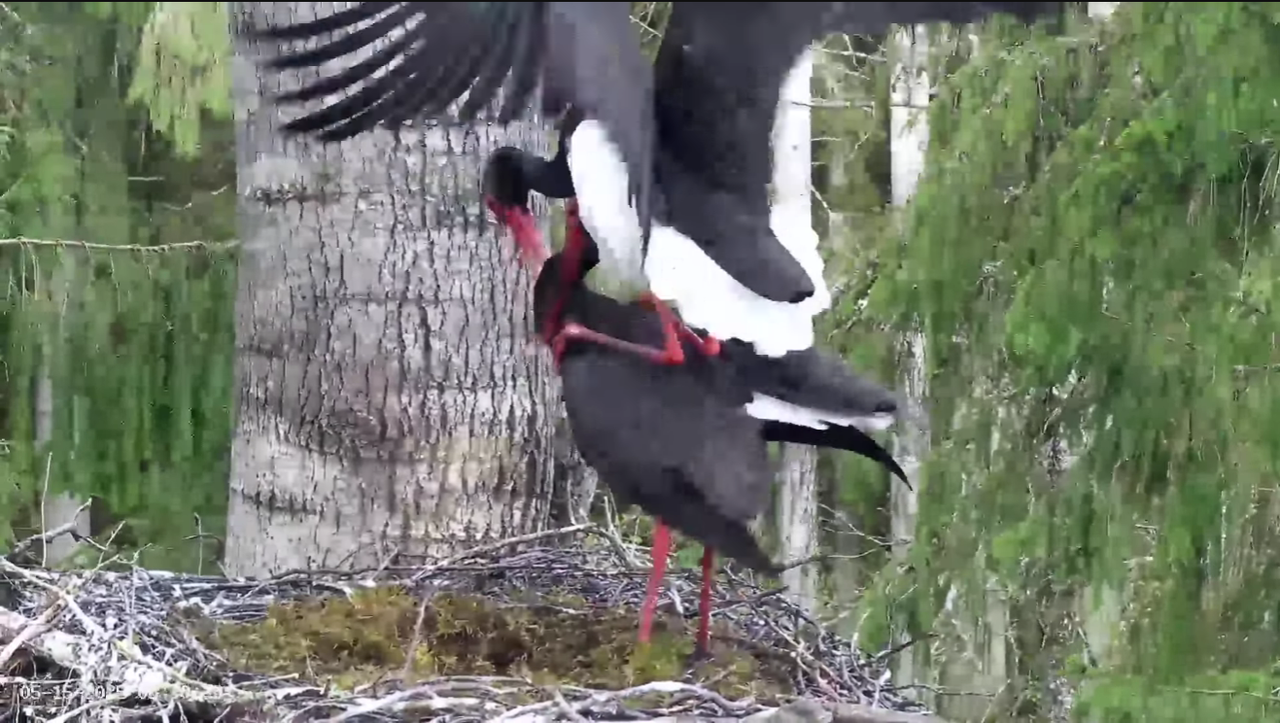
Šorīt vairākkārtēja pārošanās.
Atkal izskatās pēc saskaņas.
Pārošanās. Arī vakar bijusi novērota pārošanās, raksta čatotāji.
Šorīt vairākkārtēja pārošanās.
-
jersikiete
- Posts: 235
- Joined: 15 Feb 2022 15:25
Re: Melnie stārķi-2 Igaunijā, 2023 (Janika)
04.07.2025.
Ligzdu bieži apmeklē stārķu pāris. Arī šodien.
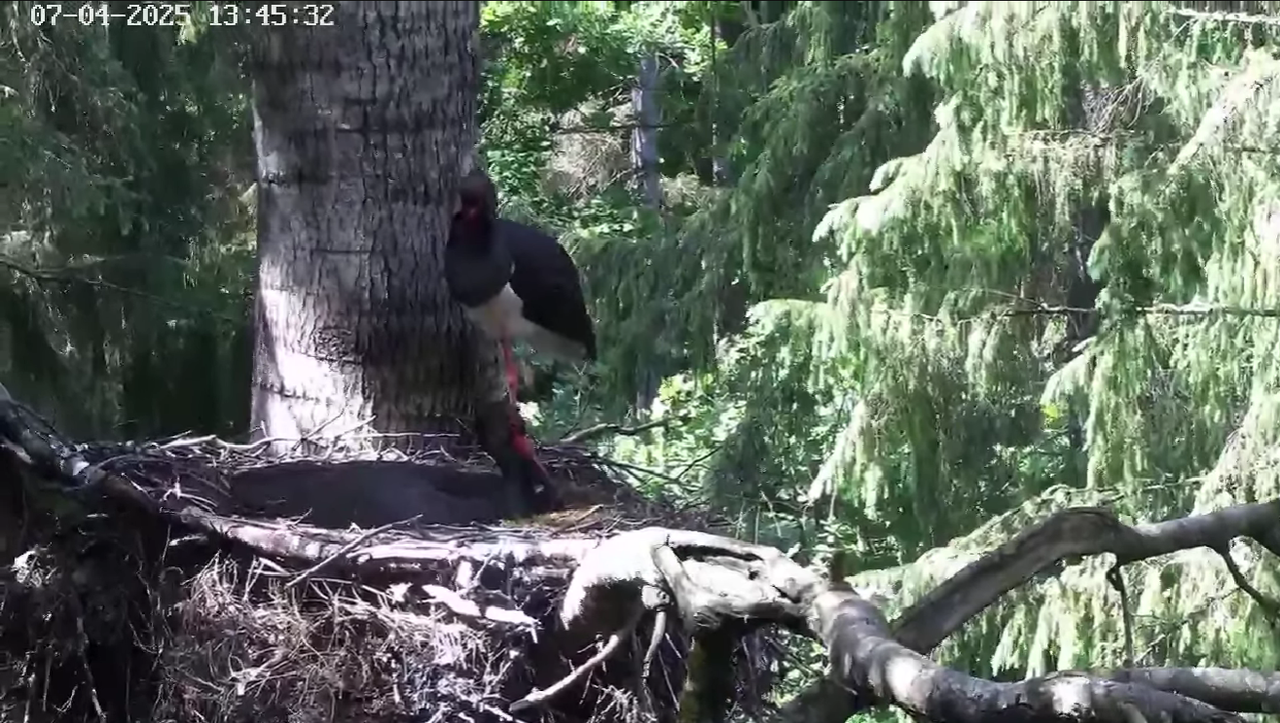
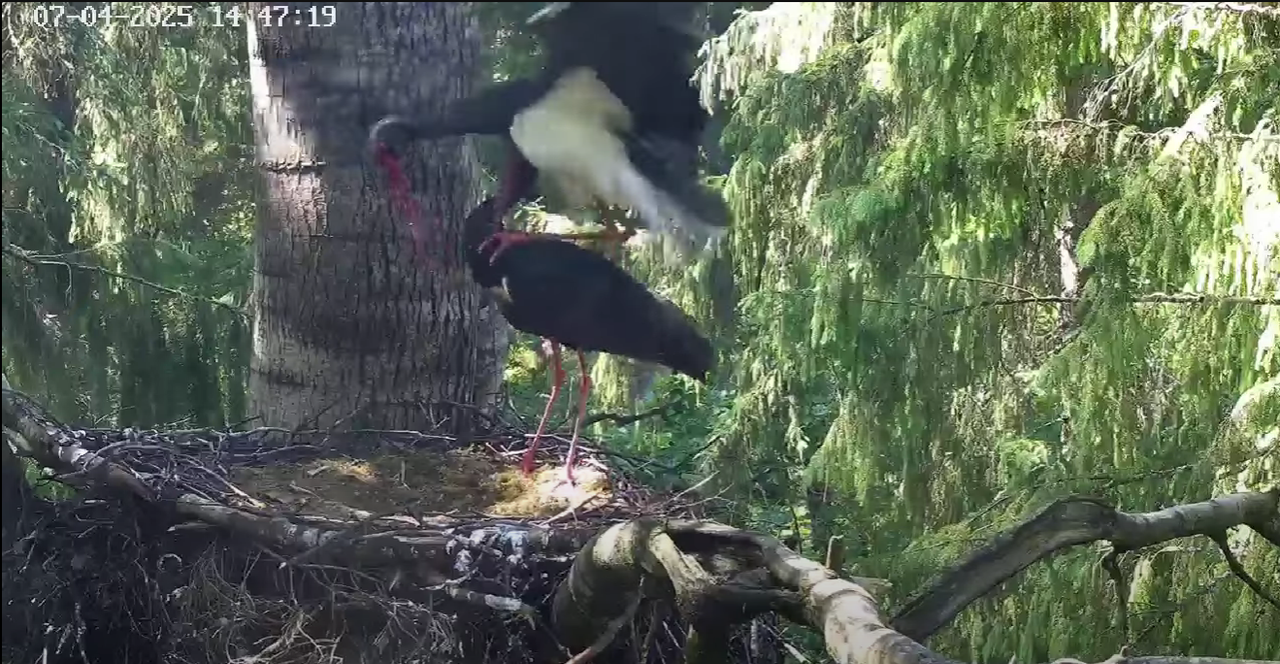
Ligzdu bieži apmeklē stārķu pāris. Arī šodien.
Last edited by jersikiete on 04 Jul 2025 23:52, edited 1 time in total.
-
jersikiete
- Posts: 235
- Joined: 15 Feb 2022 15:25
Re: Melnie stārķi-2 Igaunijā, 2023 (Janika)
Varenas emocijas sagādāja Bonus parādīšanās pie ligzdas Zāļu dienā - 23.jūnijā.
Ap to laiku ne katru dienu bija tiešraide.
Otrreiz Bonus bija vērojams šodien 17.13 - 17.50 un 17.52 - 18.01
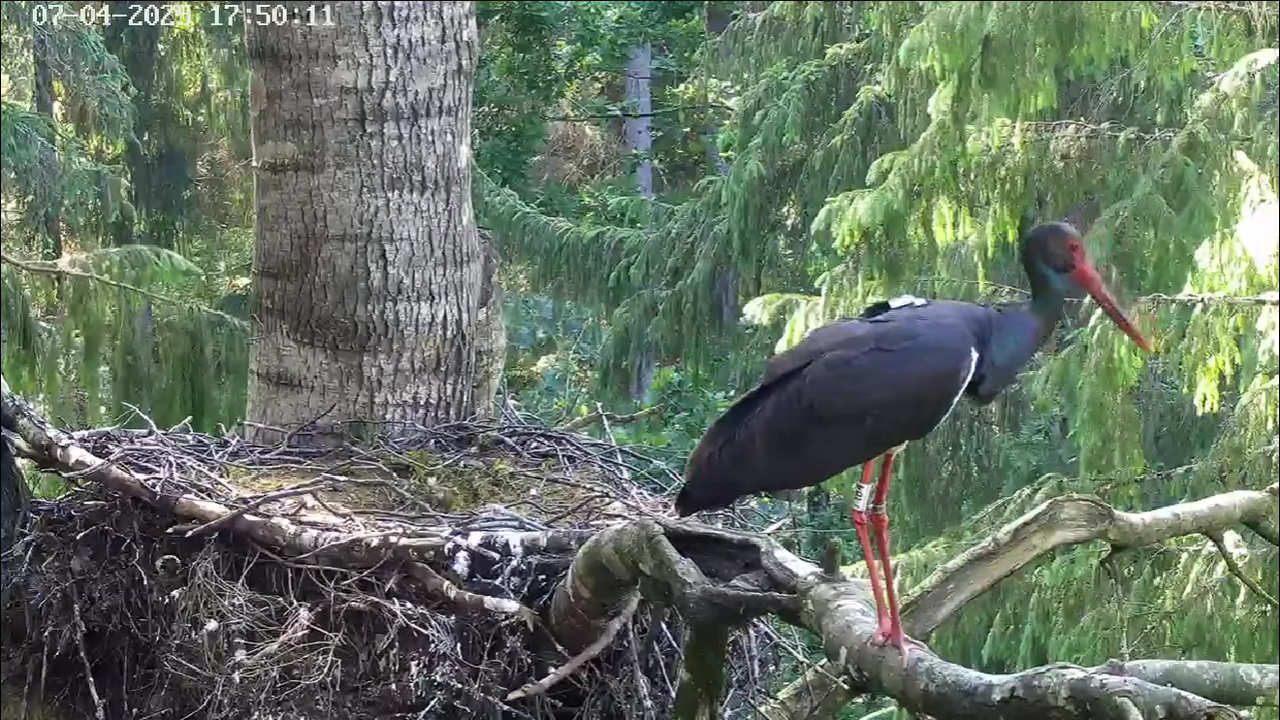
Ja par Bonus fiziskajām pazīmēm un uzvedību pirmajā reizē tika spriests, ka Bonus ir viņa,
tad šodien man šķita vīrišķīga uzvedība, ilgi kārtojot ligzdu.
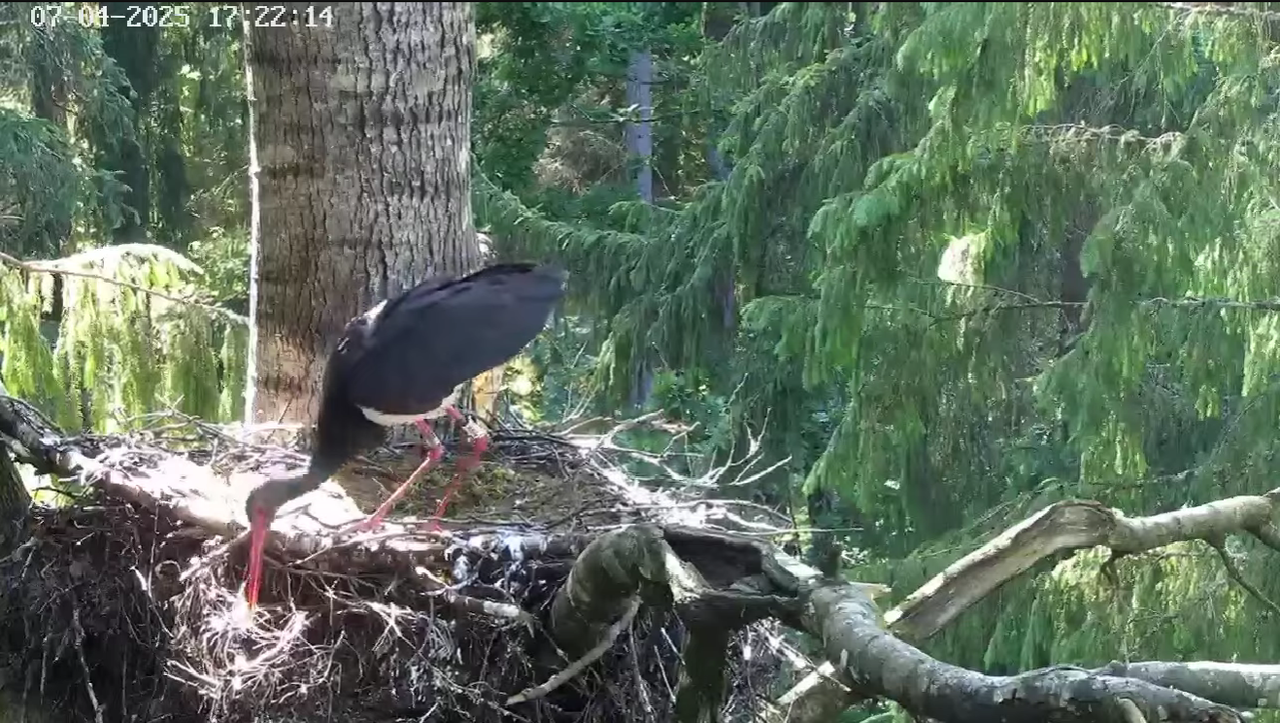
Augums arī varens.
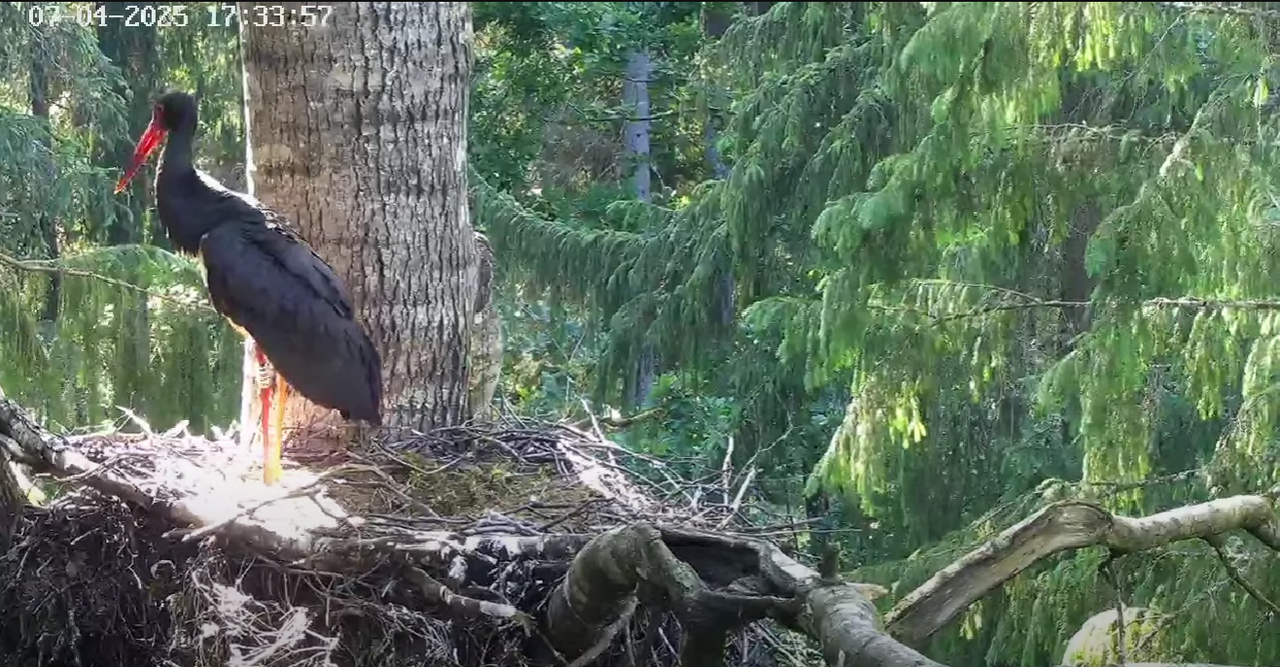
Ierodoties nesvilpoja. Bet ligzda nav Bonus īpašums.
Ap to laiku ne katru dienu bija tiešraide.
Otrreiz Bonus bija vērojams šodien 17.13 - 17.50 un 17.52 - 18.01
Ja par Bonus fiziskajām pazīmēm un uzvedību pirmajā reizē tika spriests, ka Bonus ir viņa,
tad šodien man šķita vīrišķīga uzvedība, ilgi kārtojot ligzdu.
Augums arī varens.
Ierodoties nesvilpoja. Bet ligzda nav Bonus īpašums.
-
jersikiete
- Posts: 235
- Joined: 15 Feb 2022 15:25
Re: Melnie stārķi-2 Igaunijā, 2023 (Janika)
Un uz nakti ieradās cits. Nesvilpoja.
Aizdomīgi ilgi vēroja, kas te šodien ir bijis namiņā.
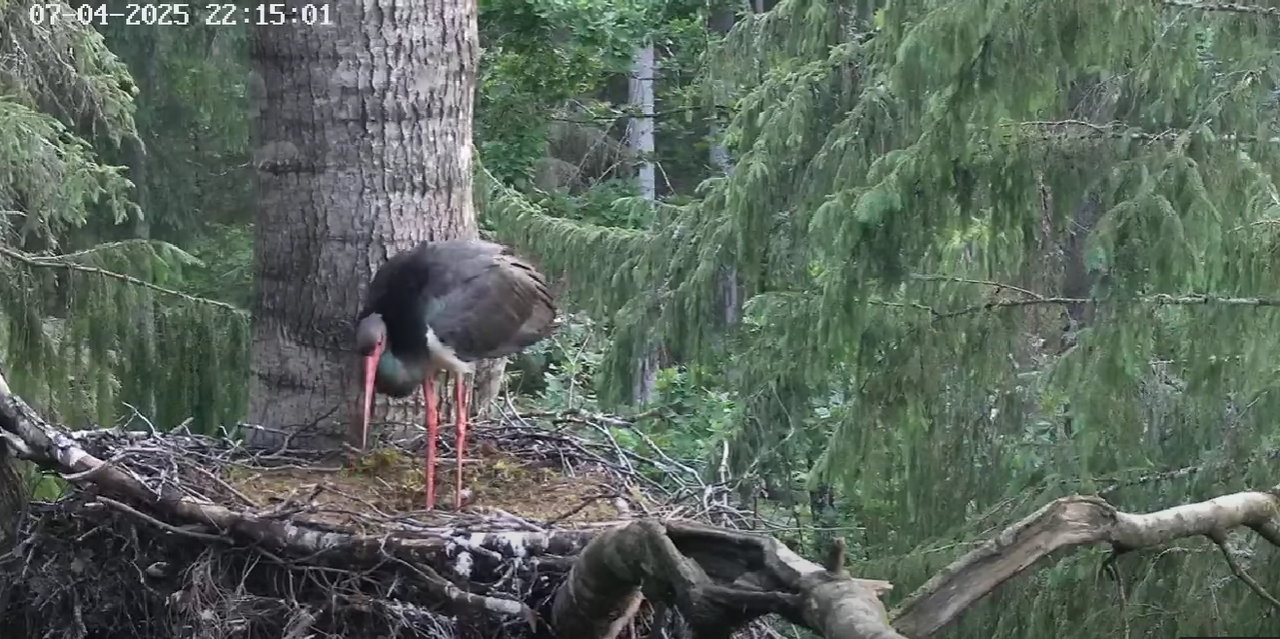
Aizdomīgi ilgi vēroja, kas te šodien ir bijis namiņā.
-
Lianaliesma

- Posts: 48800
- Joined: 02 Jun 2013 16:41
Re: Melnie stārķi-2 Igaunijā, 2023-2026 (Janika&Jans)


Kad acis, ausis un sirds atveras, dvēsele izpeldas skaistumā. Z.Mauriņa
Saskaņu forumā veicina savlaicīga un publiska vienošanās par pieņemamāko problēmas risinājumu.
Mēs mācāmies bez nosacījuma iemīlēt ne tikai putnus, bet arī cilvēkus.
Saskaņu forumā veicina savlaicīga un publiska vienošanās par pieņemamāko problēmas risinājumu.
Mēs mācāmies bez nosacījuma iemīlēt ne tikai putnus, bet arī cilvēkus.
-
Lianaliesma
- Posts: 48800
- Joined: 02 Jun 2013 16:41
Re: Melnie stārķi-2 Igaunijā, 2023-2026 (Janika&Jans)
15.jūnijs
14.un 15.jūnijā no ligzdas tika izmesti - 5.cālis 17 dienu vecumā, un 4. cālis 20 dienu vecumā.
Looduskalender komentāri par ligzdas reducēšanu tik vēlā laika posmā:
14.un 15.jūnijā no ligzdas tika izmesti - 5.cālis 17 dienu vecumā, un 4. cālis 20 dienu vecumā.
Looduskalender komentāri par ligzdas reducēšanu tik vēlā laika posmā:
Anne7 wrote: ↑14 Jun 2026 21:56 Hello Francesca, Swenja and Susanne :hi:
Yes, it’s heartbreaking.
I’ve never seen such a late brood reduction before.
The average age at which chicks are culled is around 4 to 5 days, if I’m not mistaken.
And once they are approximately 10 to 12 days old, the risk – in theory – has pretty much passed.
The youngest chick was 17 days old today.#4 is currently 19 days old.
Liz01 wrote: ↑15 Jun 2026 06:36 hi all, the pics are unbearable for meIt is hard to watch
Age by brood reduction. I found it in white storks
White storks (such as those in the local Western Pomerania population) generally perform brood reduction (infanticide) during the first 10 days of the nestling's life, with an absolute maximum cutoff age of about 10 to 14 days old
They are therefore significantly older than anything I have ever seen myself. I also haven't found anything corresponding to them in scientific papers.
The Trigger: If food shortages arise, parents deliberately identify the smallest, slowest-growing, or last-hatched chick and discard it from the nest to ensure the survival of the remaining, healthier brood
Liz01 wrote: ↑15 Jun 2026 06:45 One case was observed in Poland, in the Łochowskie Forest, where a parent grabbed the head of one of the five nestlings of its brood with its beak and threw it out of the nest. The causes of infanticide may be the overproduction of offspring, which leads parents to eliminate animals with lower life expectancy
Now I found something:
In birds, parental infanticide is a means of saving energy. By eliminating the individual which has the least chance of survival, the adults aim to increase that of the others. This type of behaviour has been observed in the Eurasian coot, the Mexican gull, the white stork and the black stork. In a study carried out in Andalusia parental infanticide was observed in 15% of white stork nests.
In general, it is the male which kills the smallest of the young and this usually occurs when they are less than a week old. What makes the event in Urdaibai different is that the individual which was killed was more than a month old (stork chick)and therefore almost fully grown.
https://www.birdcenter.org/en/news/news ... za-de-vida
Biker wrote: ↑15 Jun 2026 08:54 These reasons, you have mentioned—and, perhaps, the parents’ survival—are what have led to the brood reduction, aren’t they?
Perhaps the absolutely miserable weather and all the rain also led to the late intervention and brood reduction... :unsure:
Protecting the young from the rain until they were exhausted—which may have caused the parents to go hungry..
Since a lot, heavy rain often leads to all the chicks becoming weak..
Kad acis, ausis un sirds atveras, dvēsele izpeldas skaistumā. Z.Mauriņa
Saskaņu forumā veicina savlaicīga un publiska vienošanās par pieņemamāko problēmas risinājumu.
Mēs mācāmies bez nosacījuma iemīlēt ne tikai putnus, bet arī cilvēkus.
Saskaņu forumā veicina savlaicīga un publiska vienošanās par pieņemamāko problēmas risinājumu.
Mēs mācāmies bez nosacījuma iemīlēt ne tikai putnus, bet arī cilvēkus.
-
Lianaliesma
- Posts: 48800
- Joined: 02 Jun 2013 16:41
Re: Melnie stārķi-2 Igaunijā, 2023-2026 (Janika&Jans)
Anne7 wrote: ↑15 Jun 2026 15:38 .
I’ve been trying to understand this very late brood reduction
The scientific literature strictly states that Black Stork parental infanticide averages 4.7 days of age and usually concludes by day 11 (Cano-Alonso et al., 2024). Pushing a culling to days 17 and 20 represents a total collapse of the typical biological timeline.
I think the underlying mechanisms driving this rare anomaly, break down into four sequential stages:
1. The "high-quality parent" buffer
In typical stork nests, a large clutch of 5 chicks self-regulates early. If the food supply isn’t plentiful, the physical gap caused by asynchronous hatching (eggs hatching at different times) usually allows the oldest chicks to aggressively outcompete the youngest, or causes average parents to eliminate the “surplus” chicks by week one (Tortosa & Redondo, 1992; Cano-Alonso et al., 2024).
Because this specific pair possessed exceptional parenting skills—manifested in our observations of "private feedings” for the youngest chicks, careful nest floor (food) regulation, and extended provisioning of small food items ("baby food")—they artificially bypassed the natural early-stage safety valves. They successfully insulated the youngest two from early elimination, creating a highly unstable, maximum-capacity brood deep into the nesting cycle.
2. The non-monopolisable food trap
As we know, storks feed by regurgitating prey items onto the nest floor rather than feeding chicks directly (Zieliński, 2002) . Because this food is scattered, it is structurally impossible for older, dominant chicks to monopolise it all (Mock, 1985; Zieliński, 2002)
While this allows younger chicks to survive (much longer) under optimal conditions, it becomes a dangerous “trap” during a resource shortage. Instead of the youngest chick starving while the oldest thrive, all chicks face partial starvation. Zieliński (2002) notes that because passive starvation is uniquely inefficient in storks, parents are forced to use active infanticide to forcefully break the resource deadlock when the entire brood's survival is compromised.
3. The multi-day rain "sentry cost" and efficient foraging failure
At 17–20 days old, stork chicks are undergoing a massive exponential growth spike and require peak daily caloric mass. Simultaneously, their plumage is still downy, meaning they lack waterproofing and are highly vulnerable to hypothermia.
The multi-day rain event created a catastrophic double-bind:
- First, it imposed a heavy "sentry cost": an adult had to remain permanently anchored to the nest to act as an umbrella for 5 large chicks, instantly slashing the pair's collective foraging efficiency by 50%.
- Second, heavy rain muddies water clarity and alters prey behaviour, crippling the remaining foraging parent's ability to hunt successfully.
The parents hit a maximum-stress energetic wall precisely when the chicks' caloric demands peaked.
4. Frustration-induced behavioural overwrite
Avian parental care is governed by high prolactin levels. However, acute physical exhaustion, starvation, and an empty crop cause an immediate surge in the stress hormone corticosterone.
As we observed, the male became visibly exhausted and nervous under the relentless, physical begging of five hungry chicks (nutritional stress). When an adult's crop is entirely empty, intense begging ceases to act as a stimulus for regurgitation; instead, the neurological pathways flip, re-contextualising the begging as a direct physical irritation. Because the 17- and 20-day-old chicks were structurally smaller and maybe making the most desperate demands, they became the immediate targets for this stress-induced behavioural shift. Anyway, in the vast majority of cases, it is the youngest chick(s) that are culled if brood numbers need to be reduced.
Summary of the "horror"
The extreme physical violence of the acts we’ve witnessed, is directly explained by Cano-Alonso et al. (2024), who documented that storks are morphologically incapable of swallowing or swiftly culling a chick past 11 days old, due to the hardening of the chick's skeletal system, and due to its size. Because the male was executing a delayed, emergency survival directive on chicks whose bones had already ossified, his (made-for-fish-grasping) beak could not perform a swift termination, resulting in the harrowing, prolonged struggle we witnessed.
I’ll add the sources later
Edit:
Primary sources
Cano-Alonso, L. S., Sellis, U., Tamás, E. A., et al. (2024). Filial cannibalism in the Black Stork (Ciconia nigra).
(Establishes the standard baseline of infanticide ending at day 11).
Zieliński, P. (2002). Brood reduction and parental infanticide — are the White Stork Ciconia ciconia and the Black Stork C. nigra exceptional?
(Explains the non-monopolisable food hypothesis and why stork parents must actively intervene).
Tortosa, F. S., & Redondo, T. (1992). Motives for Parental Infanticide in White Storks Ciconia ciconia.
(Analyses cost-benefit ratios, brood sizes, and parental feeding stress).
Mock, D. W. (1985). Siblicidal brood reduction: The prey-size hypothesis.
(Foundational text on how prey delivery types dictate parent-versus-sibling aggression dynamics).
Kad acis, ausis un sirds atveras, dvēsele izpeldas skaistumā. Z.Mauriņa
Saskaņu forumā veicina savlaicīga un publiska vienošanās par pieņemamāko problēmas risinājumu.
Mēs mācāmies bez nosacījuma iemīlēt ne tikai putnus, bet arī cilvēkus.
Saskaņu forumā veicina savlaicīga un publiska vienošanās par pieņemamāko problēmas risinājumu.
Mēs mācāmies bez nosacījuma iemīlēt ne tikai putnus, bet arī cilvēkus.
-
Lianaliesma
- Posts: 48800
- Joined: 02 Jun 2013 16:41
Re: Melnie stārķi-2 Igaunijā, 2023-2026 (Janika&Jans)
16.jūnijs
https://www.ciconianigra.sk/viewtopic.p ... 709#p58709
Pēc drāmas Karulas melnā stārķa ligzdā Urmass dažas stundas vēlāk atnesa zivju grozu ligzdas tuvumā. Stārķis to atrada stundu vēlāk un diezgan regulāri tur ierodas. Sākotnēji plāns bija sākt ielaist vairāk zivju tikai jūnija vidū, taču notikušais ligzdā parādīja, ka šī gada sausais pavasaris jau apgrūtina tiem medījuma atrašanu un tiem ir nepieciešams vairāk zivju. Ceram, ka ligzdā vairs netiks iznīcināti nekādi mazuļi.
https://www.ciconianigra.sk/viewtopic.p ... 709#p58709
Pēc drāmas Karulas melnā stārķa ligzdā Urmass dažas stundas vēlāk atnesa zivju grozu ligzdas tuvumā. Stārķis to atrada stundu vēlāk un diezgan regulāri tur ierodas. Sākotnēji plāns bija sākt ielaist vairāk zivju tikai jūnija vidū, taču notikušais ligzdā parādīja, ka šī gada sausais pavasaris jau apgrūtina tiem medījuma atrašanu un tiem ir nepieciešams vairāk zivju. Ceram, ka ligzdā vairs netiks iznīcināti nekādi mazuļi.
After the drama at the Karula Black Stork nest, Urmas brought a fish basket near the nest a few hours later. B-Stork found it an hour later and visits there quite regularly. Originally, the plan was to start bringing in more fish only in mid-June, but what happened at the nest showed that this year's dry spring is already making it difficult for them to find prey and they need more fish. We hope that no more chicks in the nest will be eliminated.


Kad acis, ausis un sirds atveras, dvēsele izpeldas skaistumā. Z.Mauriņa
Saskaņu forumā veicina savlaicīga un publiska vienošanās par pieņemamāko problēmas risinājumu.
Mēs mācāmies bez nosacījuma iemīlēt ne tikai putnus, bet arī cilvēkus.
Saskaņu forumā veicina savlaicīga un publiska vienošanās par pieņemamāko problēmas risinājumu.
Mēs mācāmies bez nosacījuma iemīlēt ne tikai putnus, bet arī cilvēkus.
-
Lianaliesma
- Posts: 48800
- Joined: 02 Jun 2013 16:41
Re: Melnie stārķi-2 Igaunijā, 2023-2026 (Janika&Jans)
14.jūlijs
Grezenošana.
1.cālis/51 diena, 710J
2.cālis/50 diena, 710M
3.cālis/50 diena, 710N
10:51 Urmas

13:11 Cāļi atguvušies un nu uzlasa Urmas atstāto cienastu.

18:31 710M -710J - 710N

Grezenošana.
1.cālis/51 diena, 710J
2.cālis/50 diena, 710M
3.cālis/50 diena, 710N
10:51 Urmas
13:11 Cāļi atguvušies un nu uzlasa Urmas atstāto cienastu.
18:31 710M -710J - 710N
Kad acis, ausis un sirds atveras, dvēsele izpeldas skaistumā. Z.Mauriņa
Saskaņu forumā veicina savlaicīga un publiska vienošanās par pieņemamāko problēmas risinājumu.
Mēs mācāmies bez nosacījuma iemīlēt ne tikai putnus, bet arī cilvēkus.
Saskaņu forumā veicina savlaicīga un publiska vienošanās par pieņemamāko problēmas risinājumu.
Mēs mācāmies bez nosacījuma iemīlēt ne tikai putnus, bet arī cilvēkus.